

For a long time, getting power to underserved communities in India was seen as an act of goodwill. Something you’d find tucked into a CSR report, not treated as a core national priority. That’s no longer good enough. Industries are scaling up, digital economies are expanding, and climate targets keep getting tighter. Against that backdrop, electrification as social infrastructure needs to take over from the old philanthropy-first mindset. Electricity belongs in the same bracket as roads, water, and healthcare, a basic enabler of dignity, productivity, and opportunity. Not a favor handed down to those who happen to lack it.
The CSR arm of Hartek Group builds its entire community programme around a line that captures this shift well: “Power to Serve.” It’s less a slogan and more a working principle, one where village electrification and disaster response get engineered the same way a substation would, not treated as separate, one-off gestures.
Did You Know? A total of two crore 86 lakh households in the country were provided electricity connections under Pradhan Mantri Sahaj Bijli Har Ghar Yojana (SAUBHAGYA). And yet, more than 20% of rural households still deal with daily outages lasting over four hours. “Connection” and genuine “access,” it turns out, are two very different things.
Understanding Electrification as Social Infrastructure
Electrification as social infrastructure simply means treating the power grid the way governments treat highways, hospitals, and water systems, as a permanent public asset, not a one-time donation. It needs sustained investment, real engineering rigor, and long-term ownership. A donated solar lantern or a single village transformer might feel good to hand over, but it does nothing to guarantee reliable voltage, ongoing maintenance, or the extra capacity a growing village will eventually need.
That’s really the core difference between philanthropy and infrastructure. Philanthropy fixes a visible problem once. Infrastructure keeps solving problems for the next thirty years. Once electrification gets planned, engineered, and maintained with that mindset, it stops being a charitable gesture and starts becoming a durable driver of economic mobility, better education outcomes, stronger healthcare delivery, and local enterprise.
The Legacy and Limits of Rural Electrification in India
India’s track record with rural electrification in India has genuinely been remarkable. Programs like the Deendayal Upadhyaya Gram Jyoti Yojana (DDUGJY) and the Saubhagya scheme brought hundreds of thousands of villages, and crores of households, onto the grid within a decade. Few countries have pulled off expansion at that scale.
But connection was always supposed to be the first milestone, not the finish line. A lot of electrified villages are still dealing with voltage fluctuations, ageing transformers, single-phase supply that can’t run modern equipment, and distribution losses that quietly eat into whatever power actually arrives. When electrification gets treated purely as a connectivity target rather than an infrastructure commitment, this is exactly the kind of gap that persists, even in villages that are technically “electrified” on paper.
Why Power Infrastructure Development Cannot Be Left to Charity
Actual power infrastructure development needs substations, transmission corridors, transformers rated for local load growth, and skilled teams that stick around for ongoing maintenance. None of that comes out of a one-off donation drive. Grid assets need engineering standards, safety compliance, and lifecycle planning, same as a highway or a hospital would.
This is where organisations with genuine EPC expertise step in, in a way that philanthropy on its own simply can’t. Building and maintaining substations, smart distribution networks, and renewable-integrated microgrids calls for the same discipline you’d apply to any large industrial project: feasibility studies, phased execution, and being accountable for performance over years, not just weeks.
At Hartek, we’ve seen it play out firsthand, a transformer installed without a maintenance plan or trained local operators rarely stays functional past a couple of monsoon seasons. Real impact comes from building capacity around the asset, not just dropping the asset in place and walking away.
Village Electrification and Monsoon Flood-Relief: CSR as an Engineering Response
You can see the engineering-first approach most clearly in how Hartek Foundation has handled two pretty different challenges: long-term village electrification on one hand, and sudden monsoon flood-relief on the other. Both draw on the same underlying muscle, really: the ability to move fast, put trained people on the ground, and build things that actually hold up instead of just writing a cheque and calling it a day.
Take village electrification first. The Foundation’s “Smart Villages” vision doesn’t treat a village as a one-time project you finish and forget. It’s more of an evolving system. Skill labs, women-led self-help group livelihood programs, rural healthcare camps- all of it runs alongside the actual power and infrastructure work, because a village that’s wired up but still lacks local skills or healthcare access hasn’t really been served, not fully.
Flood relief tells a similar story, just squeezed into days instead of years. Punjab went through one of its worst monsoon flooding spells in recent memory in September 2025, and entire villages in Ajanala, Fazilka, and Ramdas were left without power for days on end. Hartek Foundation, working alongside Global Sikhs on the ground, got 500 solar-powered lights out to families cut off from electricity, a quick, practical fix in a situation where women, children, and the elderly were facing the biggest risks once night fell. Across Hoshiarpur, Gurdaspur, and Ferozepur, the Foundation’s response went well beyond that: close to 9,770 people were supported with essential supplies and temporary shelters, and roughly 50 homes were rebuilt complete with proper electrical fittings, not just handed a tent and a ration kit.
Harkirat Kaur, CEO of Hartek Foundation, has talked about this work as something where sustainable social transformation begins at the grassroots level, built through education, healthcare, livelihood generation, and inclusive development rather than one-off handouts. And honestly, that’s the same engineering logic showing up in both efforts. Whether it’s a transformer reaching a village for the first time or a solar light replacing power a family just lost, the response gets planned, staffed, and executed with roughly the same discipline the parent company would bring to a 400kV substation. Seen that way, CSR isn’t some department bolted onto the side of the business. It’s a direct extension of the engineering competence the company was built on.
Rethinking Power Sector CSR in India
Under Section 135 of the Companies Act, 2013, companies above certain profit and turnover thresholds have to put at least 2% of average net profit toward CSR, and national CSR spending is expected to cross Rs 38,000 crore in 2025. Even so, a large chunk of power sector CSR India initiatives still leans toward short-term, high-visibility projects: handing out solar lanterns, wiring up a single school, that sort of thing, rather than funding sustained grid investment.
Redirecting even a slice of that CSR pool toward long-term electrification infrastructure would shift outcomes considerably: mini-grids backed by maintenance contracts, transformer upgrades in chronically underserved districts, skilling programs for local linemen. Schedule VII already recognizes rural development and environmental sustainability as eligible CSR categories. The real opportunity is applying infrastructure-grade discipline to how that money actually gets spent, instead of treating it as a one-time act of generosity.
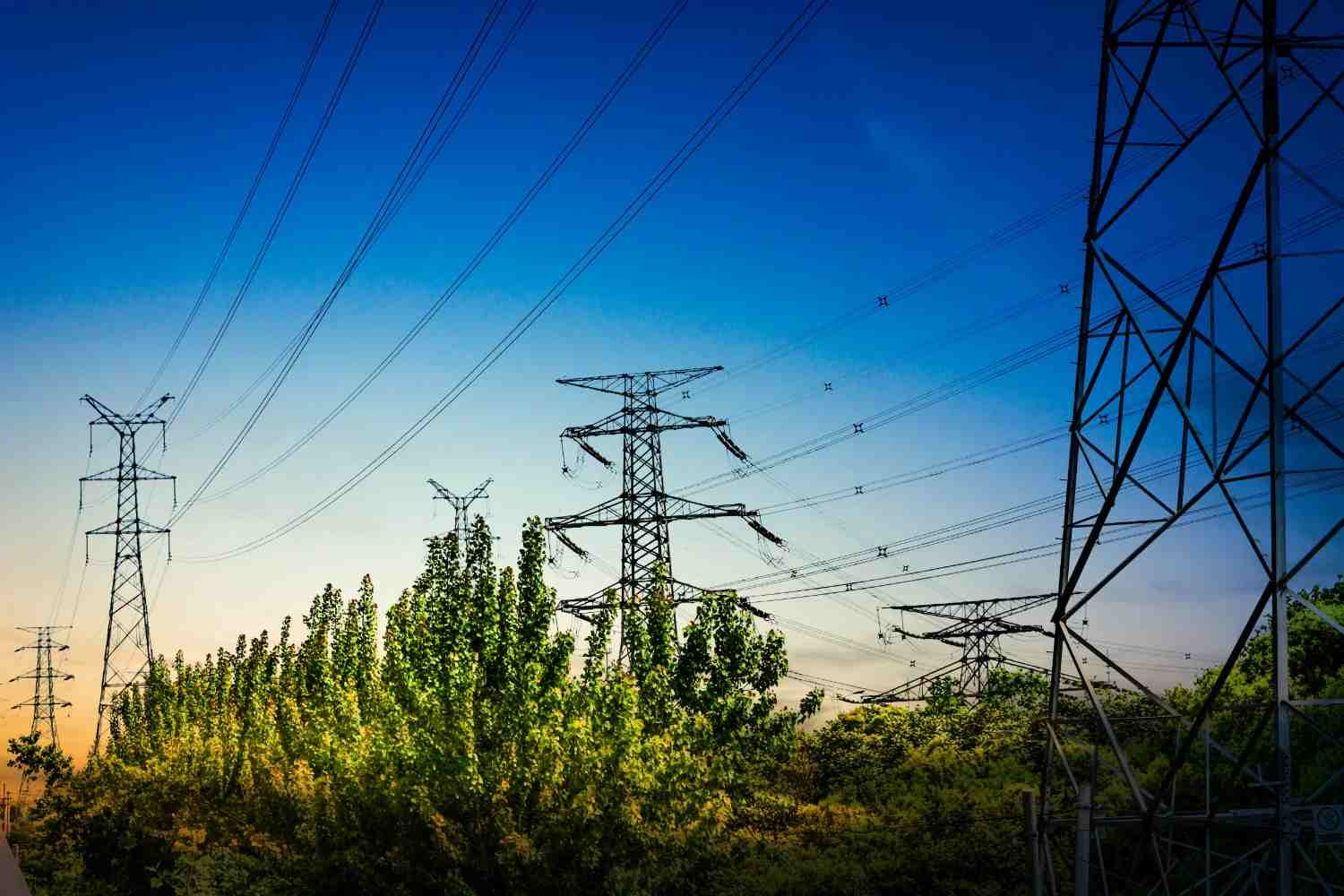
Closing the Energy Access Gap in India Through Infrastructure-First Thinking
Improving the energy access gap in India isn’t just about stringing more wire. It’s about making sure the power that reaches a village, an industrial cluster, or an urban slum is reliable enough to run a cold-storage unit, keep a rural clinic’s diagnostic equipment running, or let a small manufacturing unit operate through peak summer load. Quality and consistency of supply define real access, not just physical reach.
Decentralized renewable microgrids, battery storage for load balancing, and smart metering under schemes like the Revamped Distribution Sector Scheme (RDSS) are doing a far better job at closing this energy access gap in India than isolated donation-based projects ever could, mostly because they’re built for continuity, not a single moment of impact.
What Electrification-Led Development Looks Like in Practice
Shifting from philanthropy to infrastructure changes what gets funded, and how it gets measured. In practice, that tends to look like:
- Grid-connected microgrids built for remote clusters, with capacity headroom for future demand growth
- Maintenance-backed transformer and substation upgrades in districts already prone to chronic outages, not just fresh connections
- Skilling and employment programs that train local technicians to run and maintain new infrastructure
- Smart metering and monitoring that tracks reliability outcomes, not just how many households got connected
- Multi-year CSR commitments tied to measurable uptime and supply-quality targets, instead of a single disbursement and a photo op
This approach turns electrification as social infrastructure into a measurable, accountable program rather than a one-off feel-good announcement, and it’s the model likely to define India’s power sector for the next decade.
Powering Communities Through Sustainable Infrastructure
Electricity access built on infrastructure principles, engineering standards, long-term maintenance, measurable reliability delivers outcomes that charity alone just can’t match. As India pushes toward universal, high-quality power supply, companies, policymakers, and engineering firms all need to get behind electrification as social infrastructure as the operating principle, not something that shows up occasionally in a CSR report.
At Hartek Group, our work across power systems, renewables, and distribution infrastructure reflects exactly this belief: every substation, microgrid, and transmission line we build is a long-term commitment to the communities and industries it serves, not a one-time gesture.
Key Takeaways
- Treating power as electrification as social infrastructure means lasting reliability, not just a one-time connection for communities.
- Rural electrification in India reached wide village coverage, though supply quality and maintenance gaps are still unresolved.
- Sustainable power infrastructure development calls for engineering discipline, skilled operators, and long-term maintenance planning.
- Redirecting power sector CSR in India toward infrastructure, rather than one-off donations, creates community impact you can actually measure.
- Real energy access in India comes down to supply reliability and quality, not just whether a wire physically reaches a household.
- Hartek Foundation’s village electrification and monsoon flood-relief work show CSR functioning as an extension of core engineering competence, not a separate activity.
Frequently Asked Questions
- What does “electrification as social infrastructure” actually mean?
This is about providing access to electricity in the same way as we do roads or hospitals: well-planned, engineered, and maintained over decades with defined quality and reliability standards rather than handed out as a one-time charitable gesture or donation drive.
- Why hasn’t rural electrification in India fully solved the power access problem?
Saubhagya and DDUGJY have successfully electrified many villages for connectivity, but lots of villages are still dealing with power problems like voltage dips, old transformers, and power cuts. One of the causes of this scenario is that, in reality, the goal of electrification focused mainly on achieving the number of villages electrified rather than long-term quality, and that means the maintenance of the power system has not been given due attention.
- How can CSR funds be used more effectively in the power sector?
Instead of supporting standalone, short-duration programs, firms can redirect CSR funds toward long-term electrification investments such as sustainable microgrids, transformer replacements, technician skill development, and monitor results not in months but over years.
- What role do engineering companies play in improving energy access?
In the electricity sector, firms experienced in EPC and power infrastructure can do feasibility studies, check safety requirements, and manage assets throughout their lifespan. It is these companies that can continue operating electrification projects long after the funds used in the project have run out and also allow them to develop further without any problem.
- Is expanding grid connectivity enough to solve India’s energy access problem?
Not really: true electricity access also hinges on stable voltage, sufficient load capability, and the least possible number of power cuts, not simply on having a physical connection. If that level of electricity access is not reliable, a “connected” home or enterprise is still, by all practical means, not receiving power that’s usable.
Share:


