
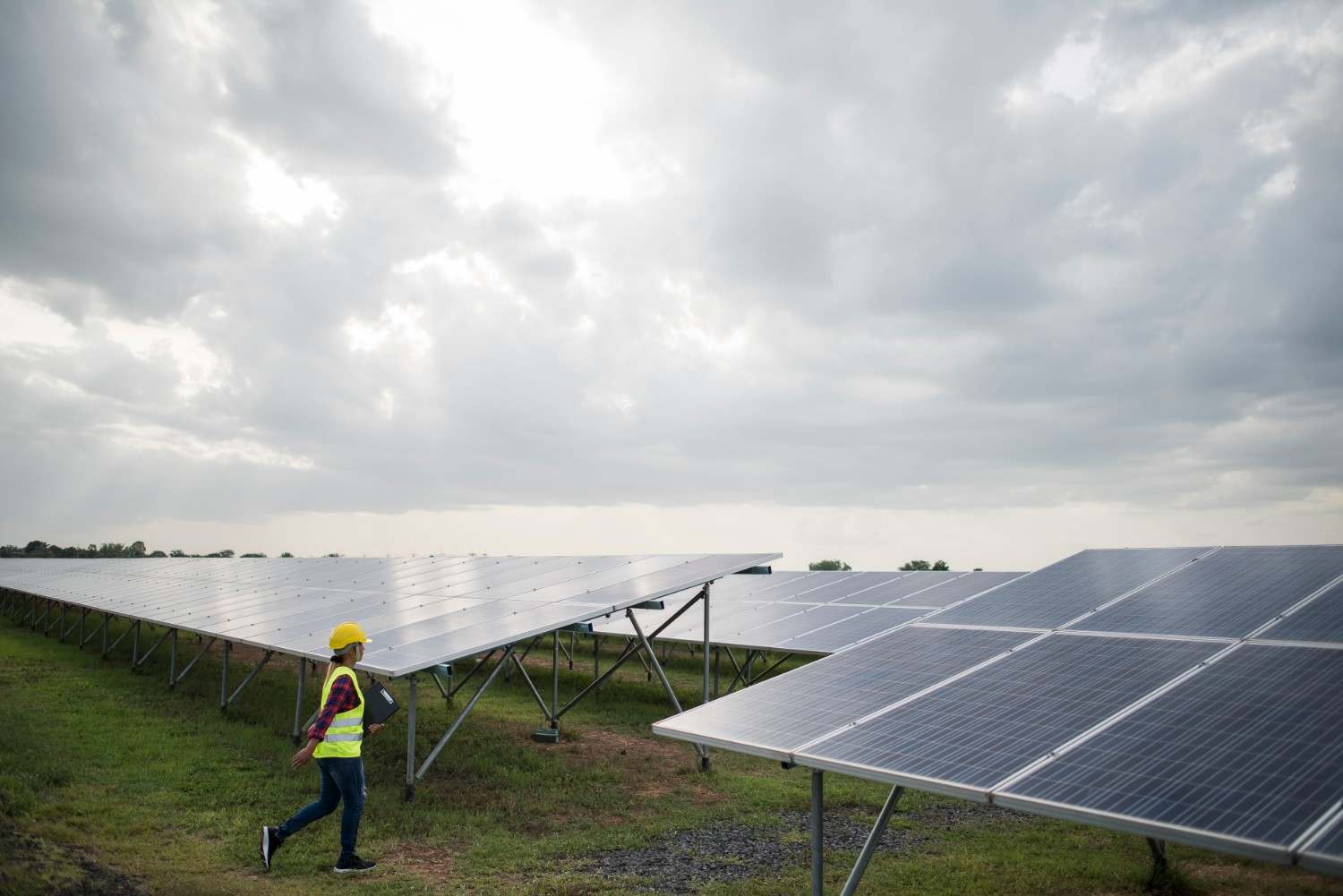
If you’re considering where to build your career next, the energy sector is worth putting on your shortlist. Transmission yards, solar sites, and control rooms across the country are opening up to young engineers right now, and few sectors offer this much hands-on responsibility so early on. Youth in power sector roles means putting India’s demographic strength to work behind the nation’s clean energy mission, not just watching it happen from the sidelines. And as the country races toward its 2047 centenary of independence, it’s hard to find a career bet that pairs personal growth with national impact quite this well, or one that’s this underrated.
Over 65 percent of India’s population is under the age of 35. That alone gives the country a workforce advantage few nations can match. Turning it into real progress, though, needs sectors capable of absorbing skilled talent at scale, and not many sectors offer that kind of scale the way power and renewable energy currently do.
Did You Know? India has crossed 300 GW of non-fossil fuel-based installed electricity generation capacity as on 31st July, 2026; over 60% of the 500 GW capacity targeted to be achieved by 2030. Industry estimates suggest the clean energy sector could support several million direct and indirect jobs by 2030. Solar EPC firms, grid infrastructure companies, and power distribution manufacturers are among the fastest-growing recruiters of young engineers, technicians, and project professionals in the country right now.
Why Youth Should Consider a Career in the Power Sector
The power sector used to feel quiet and unglamorous, tied to state utilities and legacy engineering firms where careers moved at a slow, predictable pace. Not anymore. Renewable energy expansion, grid modernization, electric mobility, and smart city development have flipped that image, turning it into one of India’s most dynamic employment generators.
Large-scale solar parks, battery storage projects, and transmission corridors all run on execution capacity, and that means companies are genuinely hunting for engineers who can work with digital tools, automation, and fast-moving project timelines. On top of that, a whole generation of experienced professionals is stepping back from utilities and EPC firms built decades ago. Opportunities for youth in power sector careers aren’t scarce right now; they’re wide open, and getting in early might matter more here than in almost any other industry you could pick.
Viksit Bharat 2047 Energy Sector and the Demand for New Talent
India’s vision for its hundredth year of independence rests heavily on energy self-reliance. The Viksit Bharat 2047 energy sector roadmap envisions a country that generates most of its power from clean sources, exports surplus renewable energy, and manufactures power infrastructure domestically instead of importing it.
Getting there needs trained hands, not just capital. Someone has to design the solar plants, operate the digital substations, manage battery storage, and keep an increasingly complex national grid running, and all of that demands skilled people. Every gigawatt of renewable capacity added creates parallel demand for design engineers, site supervisors, and project managers, most of whom are entering the workforce for the very first time.
Government-backed skill development missions, apprenticeship programs, and renewable energy training centers are working alongside private companies to build this talent pipeline. Without a steady flow of young professionals, the pace of infrastructure development needed to meet 2047 targets simply wouldn’t be achievable.
The Expanding Scope of Careers in Power Sector in India
What sets this moment unique is the vast array of roles that the power and energy space offers today. Careers in the power sector in India were initially only about electrical engineering and working in state electricity boards. But now, besides working in generation plants as part of power generation teams, there are many jobs related to planning, power system studies (design and simulation), project implementation, Quality Assurance, testing and commissioning, manufacturing, grid operation (Mainly through digital tools), and asset or performance management (of renewables).
Some of the fastest-growing career tracks include:
- Solar and BESS design engineering
- Field testing of substations and transmission equipment
- Management of EPC large-scale site implementation
- Solar digital grid monitoring and SCADA system operations
- Inspection and verification of power distribution products
- Promotion and technical sales of clean energy solutions
This breadth means graduates from electrical, electronics, mechanical, and even computer science backgrounds can all find entry points that suit their skills, instead of being boxed into one narrow specialisation.
Green Jobs for Youth in India: Where the Opportunities Lie
The clean energy transition has created an entirely new employment category that barely existed a decade ago. Green jobs for youth in India now span solar EPC execution, floating solar development, green hydrogen research, battery storage engineering, and carbon reduction consulting. Companies executing utility-scale solar and power system projects are actively hiring apprentices, trainees, and fresh graduates, giving young professionals hands-on exposure to live infrastructure instead of purely theoretical training.
Some of the fastest-growing green roles right now include:
- Solar EPC design and site execution
- Floating solar and rooftop C&I project engineering
- Battery Energy Storage System (BESS) integration and testing
- Green hydrogen research and pilot project support
- Carbon reduction and sustainability consulting
This shift matters beyond just employment numbers, too. Every young engineer working on a solar plant or a smart substation is directly contributing to decarbonization targets. That makes these roles a rare category where career growth and environmental impact move in the same direction.
Skills That Define Tomorrow’s Power Sector Professionals
Getting into this sector today takes more than a core engineering degree. Employers increasingly look for technical grounding paired with digital fluency, and honestly, the profile of a strong candidate has shifted quite a bit over the past few years.
The skills employers now prioritise include:
- Familiarity with renewable energy systems and grid-integration basics
- Comfort with digital monitoring tools, sensors, and automation platforms
- Working knowledge of battery storage, HVDC, and FACTS technologies
- Project execution skills for time-bound, large-scale infrastructure work
- Adaptability to work across disciplines on fast-moving projects
Educational institutions are slowly updating curricula to reflect these needs, but a lot of the practical skill-building still happens on the job, through structured apprenticeships and mentorship within engineering firms.
Hartek Group and the Push to Build India’s Energy Workforce
Organisations executing large-scale power infrastructure projects have a direct role to play in strengthening this talent pipeline. At Hartek Group, an EPC company operating across Power Systems, Renewables, and Power Distribution manufacturing, young engineers are brought into live solar, substation, and grid infrastructure projects through structured apprenticeship and trainee programs. That kind of exposure to testing and commissioning, site execution, and manufacturing quality work would otherwise take years to reach.
Challenges and the Roadmap for Freshers
Despite the growing opportunities, entering the power sector isn’t exactly friction-free for young professionals. A few gaps still slow down how quickly fresh talent becomes truly job-ready.
Common challenges include:
- Limited exposure to live infrastructure projects during formal education
- A skills gap between classroom learning and site-level technical requirements
- Uneven awareness of the range of roles available beyond core electrical engineering
- Regional disparities in access to training centers and apprenticeship programs
To bridge these gaps effectively, a more intense partnership is required between academies/colleges, government departments responsible for skill development, and energy-producing companies that are capable of financing an apprenticeship-like, work-based training program.
Powering a Shared Future
India’s path to 2047 won’t be decided solely by policy targets or installed capacity figures. It’ll be decided by whether enough skilled young professionals are ready to design, build, and operate the infrastructure those targets depend on. The steady movement of youth in power sector careers is already reshaping how India approaches energy security, manufacturing self-reliance, and climate commitments.
As renewable capacity expands and grid infrastructure modernises further, it’ll be the companies and institutions that invest early in young talent that shape how fast this transition moves. The national vision depends on this generational handover succeeding, and the early signs suggest India’s youth are ready to take on that responsibility.
Key Takeaways
- Providing the power sector a platform for young professionals has now become imperative rather than just a chance, as senior professionals reach retirement age and renewable energy rapidly expands.
- India’s energy plan for the year 2047 is very much dependent on the regular recruitment of trained young engineers entering solar, grid, and manufacturing roles.
- Power sector entry-level roles now cover several areas, not just electrical engineering. Apart from the design aspect, there are roles in digital operations, manufacturing, and project implementation.
- Careers in solar, BESS, and green hydrogen are among those areas in the renewables field that offer not only an interesting career path but also the chance to make a positive contribution to the environment directly.
- Manufacturing and EPC companies run apprenticeship and traineeship programmes which have become a bridge between academic skills and work with real-life infrastructure.
FAQs
- Why is youth participation important for India’s power sector?
Expansions of renewable energy and the modernisation of transmission and distribution networks depend on the continuous availability of human power. An old, experienced workforce has been slowly replaced by a younger generation of engineers bringing digital fluency as well as adaptability when working on large-scale infrastructure projects.
- What kind of roles are available for fresh graduates in the Indian Power sector?
Graduates and students fresh out of college can join different departments and roles in a wide array of industries such as solar energy and BESS (Battery Energy Storage Systems) design engineering, testing and commissioning work, site management of projects, digital grid monitoring, QC in manufacturing units, technical sales, etc. at EPC and energy infrastructure companies.
- What are considered green jobs in India’s energy sector?
In the context of green jobs, environmental protection and resource development are closely related and intertwined. Examples of such jobs would be solar EPC implementation, floating solar farm development, battery energy storage systems, green hydrogen projects, and carbon offsetting schemes, which directly link to the increase in renewable energy capacity, etc.
- How does the power sector contribute to India’s Viksit Bharat 2047 vision?
Human availability and capability, besides the ever-growing number of personnel, have much accelerated implementation in solar, grid, and manufacturing. Because of this, India’s targets for self-sufficiency in energy, domestic manufacturing, and decarbonization by 2047 are fully aligned with the power sector’s ability to support them.
- How can students prepare for a career in the power sector?
Getting an entry-level job in this sector is a major challenge. To even be a contender, one would have to demonstrate knowledge of electricity or at least be generally comfortable with solar energy systems. Looking for internships or apprenticeships provided by Energy Projects and Manufacturing is a way to get hands-on experience. Learning the basics about digital power and automation tools could also be useful.
Share:


