
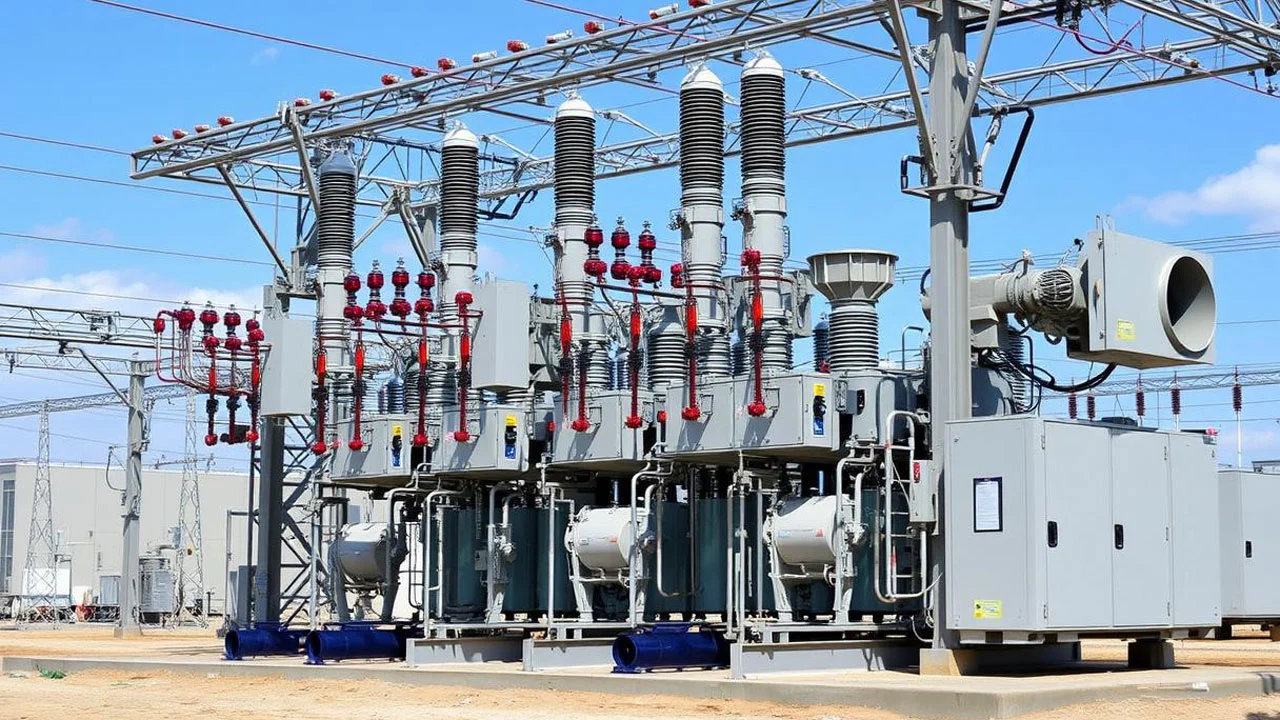
India’s electricity sector is moving to a new era where the importance of speed, reliability, and smart infrastructure will match that of power generation itself. With the rapid addition of renewable energy capacity and the rapid pace of industrial development, updating substation facilities through modern technology cannot be postponed any longer. Among the technologies driving this transition, GIS substation infrastructure is emerging as one of the most significant solutions for India’s future grid.
Because of its massive renewable energy ambitions, development of industrial corridors, and transmission needs along the coast, Gujarat is showing how installing smart grid infrastructure can help in changing the ways energy is delivered. The state’s recent transmission expansion programs, especially around Kansari and Bhuj, are good examples of the bigger nationwide trend of moving towards smarter and more resilient power systems.
More importantly, these projects represent a growing move toward scalable infrastructure capable of supporting India’s long-term energy transition.
“Did You Know? Gujarat is becoming a major hub for smart GIS substation infrastructure due to rapid solar and wind expansion in regions like Bhuj and Kutch. With rising infrastructure demand, the state is accelerating investments in smart and scalable infrastructure to strengthen India’s electrical power transmission system and support renewable energy integration.”
Why Gujarat is Emerging as a Smart GIS Hub
Positioned strategically in the Indian energy map, Gujarat is home to large zones of renewable energy production, a rapidly growing industrial sector, significant ports, and urban areas that keep on expanding. These factors are driving unprecedented infrastructure demand across the state.
On the other hand, from the transmission point of view, Gujarat also presents certain difficulties:
- High moisture and salt level in the atmosphere near the coast
- Very limited land availability close to industrial areas
- Increase in power demand
- Transmission of renewable energy over long distances
- Exposure to tough environmental conditions
In such situations, space requirements, maintenance, and environmental exposure for traditional substations prove to be a struggle. A GIS substation totally changes the game.
Where normal Air Insulated Substations (AIS) have their equipment open to the air, GIS uses sulfur hexafluoride (SF6) gas insulated gear housed inside small metal boxes. This not only shrinks the size of the installation but also enhances its reliability and makes it safer to operate.
Regions like Gujarat, where industrial and clean energy developments happen side by side, now see the need for GIS technology as a must, not a choice.
The Strategic Shift Toward Smart GIS Infrastructure
The new transmission works in Gujarat are actually part of the bigger picture of technological evolution in India’s power sector.
Projects around Bhuj and Kansari are especially important because they support renewable integration while strengthening the overall electrical power transmission system. Bhuj, in particular, has become one of India’s key renewable evacuation hubs due to the rapid growth of solar and wind energy projects in western India.
Through the construction of substations at Extra High Voltage (EHV) levels as well as their respective transmission system expansions, the Grid is being strengthened to handle fluctuating levels of renewable power while also enhancing its overall stability. (Energetica India)
Switching isn’t just sufficient anymore. The real direction is toward smart, interconnected, and ready-for-the-future power infrastructures.
Hartek Group’s Contribution to Gujarat’s High-Voltage Infrastructure
Gujarat’s transition toward a smarter and more resilient transmission network is being accelerated by strategic high-voltage infrastructure projects that support large-scale renewable energy integration. A notable example is Hartek Group’s 400 kV substation project for SPRNG Energy in Banaskantha, Gujarat. Under this project, Hartek is establishing a 33kV/400kV Pooling Substation to support a 300 MW solar power plant at Ramsan Village, Taluka Deesa, enabling efficient evacuation of renewable energy and seamless integration with the grid. This critical infrastructure strengthens Gujarat’s transmission capacity while supporting the state’s clean energy ambitions.
Projects such as these highlight the growing importance of GIS substations, Extra High Voltage (EHV) networks, and smart transmission systems in meeting rising infrastructure demand and building scalable infrastructure capable of supporting India’s long-term energy transition.
Why GIS Substations are Ideal for Coastal Regions
Geography is one of the strongest reasons that explains why Gujarat is leading the way in the adoption of GIS.
The installation of transmission lines in coastal zones faces high challenge levels. Salt in the air, humidity, corrosion, and general weathering through exposure are some of the factors that cause a substation’s performance to deteriorate over time when it is based on traditional designs. With the consequence of rising costs for repair and maintenance, it also becomes more difficult to continue with the preferred level of reliability.
A GIS substation addresses many of these concerns directly.
1. Space Efficient Feature
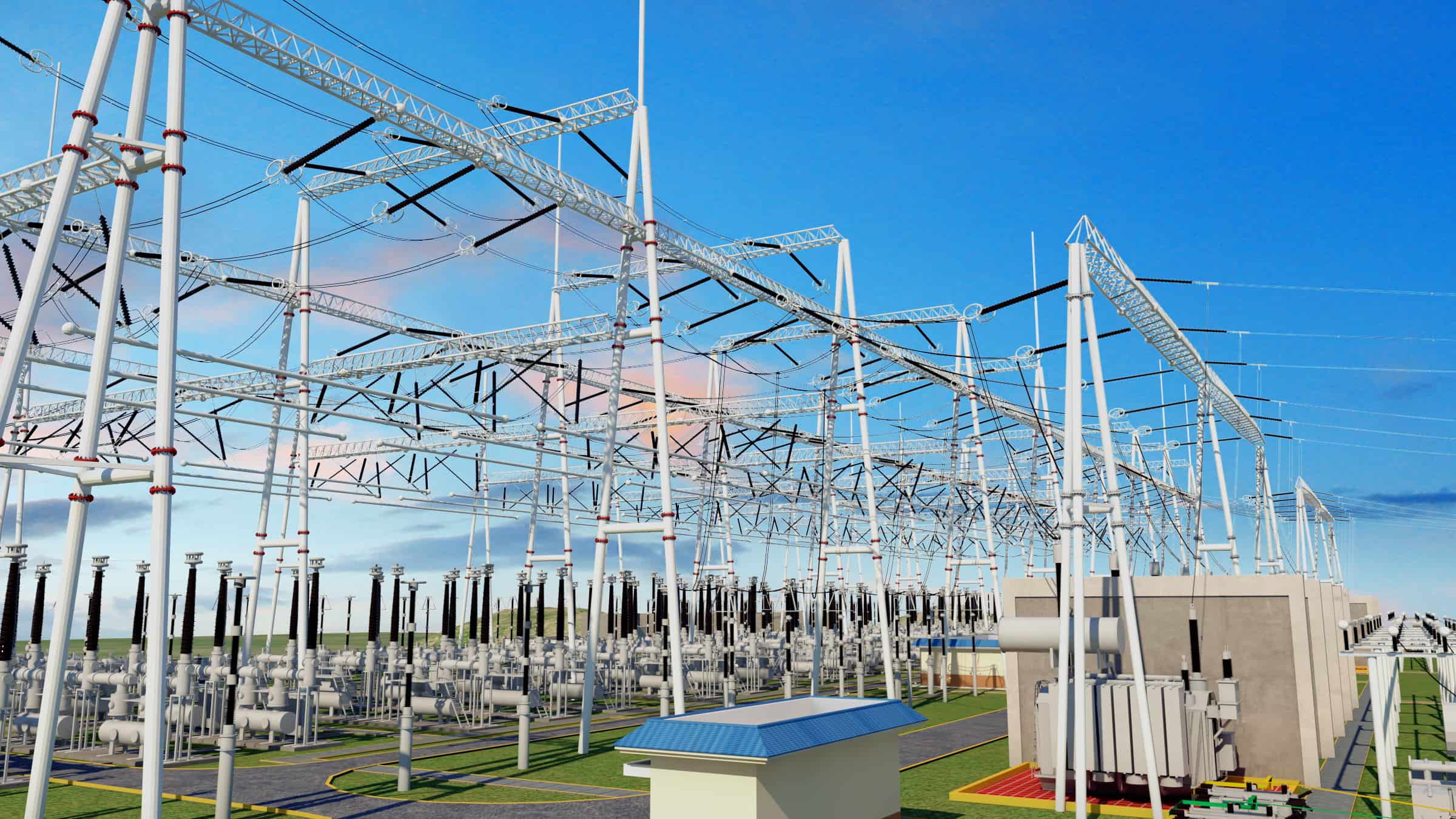
Locations near for example, industrial zones, ports, and urban areas are not only quite costly but the availability is very limited. With GIS substations, the space needed is approximately 35% less than that of an average traditional setting based on AIS.
Due to this well thought out compactness, utilities will be able to:
- Build substations closer to load centers
- Encounter less challenges when it comes to land acquisition
- Have better optimised urban infrastructure plans
- Enlarge transmission network at a more rapid pace
In case of Gujarat’s rapidly expanding industrial sectors, such space effectiveness is transforming into a very important factor.
2. Minimal Maintenance Needs
Substations of traditional design that get affected by coastal conditions are normally in need of frequent cleaning, inspection, and maintenance.
On the flip side, a GIS is a closed system that operates within a sealed enclosure, which has the effect of keeping kicker:
- Dust
- Humidity
- Salt
- Pollution
- Corrosion
As a matter of fact, utilities are experiencing:
- Less upkeep expenditures
- Less unscheduled shutdowns
- Breaking equipment less frequently
- Greater operational effectiveness
This also makes GIS very appropriate for the coastal transmission routes of Gujarat.
3. Reliable Infrastructure and Less Grid Failure
Renewable energy penetration can destabilise the power grid, which in turn leads to the need for quick-response systems and highly reliable operations.
GIS equipment is equipped with:
- Smart monitoring
- On-the-spot diagnostics
- Protection systems at a very advanced level
- Automation based on digital technology
- Fault isolation skills
The aforementioned capabilities lead to the strengthening of the grid’s resilience as a whole and make power outages far less likely.
Areas where industries rely on power continuity may thus view the presence of dependable substations as a hallmark of economic progress.
The Emergence of Smart GIS Technology
The rise of next-gen GIS infrastructure goes well beyond just the compact nature of hardware. Instead, it is becoming smarter.
Current smart GIS substations combine
- IoT-enabled systems used for monitoring
- AI-driven maintenance forecasting
- Remote troubleshooting
- Automated circuit breaker operations
- Digitally-operated protection relays
- Continuous monitoring of asset condition
These features convert regular substations to hubs of data-driven power management.
Utilities gain the ability to:
- Detect faults before failures occur.
- Keep track of equipment performance remotely.
- Enhance operation efficacy.
- Minimize human participation.
- Extend the working life of the equipment.
- Get back to normal faster after disturbances.
This shift toward digital substations is helping create a more responsive and resilient electrical power transmission system across India.
How GIS Supports Renewable Energy Integration
Renewable power generation is variable by nature.
Solar plants work better when the sun is out, and wind turbines generate more when the wind blows. Such variations put great pressure on the power grid.
Without able transmission infrastructure:
- It becomes impossible to use renewable energy efficiently
- Voltage fluctuations go up
- Grid congestion becomes worse
- Transmission losses increase
Smart GIS substations provide solutions for these problems primarily by enabling:
- Higher speed of operations
- Improved voltage regulation
- Stable power supply
- Efficient renewable energy integration
- Greater grid flexibility
This aspect for example is very relevant to Gujarat considering that its renewable zones are continuously expanding at a rapid pace. As India will keep adding more renewable capacity, smart GIS infrastructure will become a very important element in ensuring grid stability.
The Growing Role of BESS in Smart Grid Infrastructure
As renewable energy capacity continues to expand across Gujarat, the focus is no longer limited to power generation and transmission alone. Battery Energy Storage Systems (BESS) are becoming an essential component of modern grid infrastructure, helping utilities manage variability in solar and wind generation while enhancing grid reliability.
When integrated with a GIS substation and advanced transmission network, BESS offers several advantages:
- Stores excess renewable energy during periods of high generation
- Supplies stored energy during peak demand periods
- Improves grid stability and frequency regulation
- Reduces renewable energy curtailment
- Supports faster restoration during grid disturbances
- Enhances flexibility within the electrical power transmission system
For renewable-rich regions such as Gujarat, where solar and wind generation capacities are expanding rapidly, BESS acts as a bridge between renewable generation and reliable power delivery. Combined with smart GIS infrastructure, energy storage systems are enabling utilities to build more resilient, flexible, and future-ready grids capable of supporting India’s evolving energy landscape.
Smart Infrastructure is the Foundation of Economic Growth
Digital lines of business, manufacturing environments, data centers, and electrically powered transportation are all substantially increasing the demand for electricity.
This growing infrastructure demand requires utilities to build systems that are:
- Scalable
- Finitely intelligent
- Not prone to failures
- Environmentally friendly
- Capable of meeting future requirements
Old infrastructure can hardly sustain such a transition.
In addition, a smart GIS substation enables one to:
- Industrial corridors
- Smart cities
- Ports and logistics hubs
- Renewable energy parks
- Urban electrification
- EV charging infrastructure
This is the reason why the transmission vision of Gujarat is now more focused on high-level and scalable infrastructure.
Gujarat’s GIS Expansion Reflects a National Trend
The projects undertaken around Kansari and Bhuj are just the tip of the iceberg structured in the context of the major transformation of India’s power sector.
Currently, utilities are not only concerned with increasing capacity but rather the shift is towards:
- Digitalization
- Automation
- Smart monitoring
- Predictive maintenance
- High-reliability infrastructure
Not merely a power transmission grid, the future one will be a power management grid, and intelligence will be a key feature.
With challenges of climate change, increased demand, and difficulties arising from integrating renewables, smart GIS is bound to be a major character in the scene of continuous power and efficient delivery.
Key Takeaways
- GIS substations are becoming essential for Gujarat’s rapidly growing energy ecosystem.
- Coastal regions benefit significantly from GIS due to high reliability and low maintenance.
- Smart GIS technology supports renewable integration and grid stability.
- Gujarat’s transmission expansion reflects rising infrastructure demand across India.
- Scalable infrastructure will define the future of India’s electrical power transmission system.
Conclusion
India’s energy transition is no longer only about generating clean energy. It is equally about creating intelligent transmission infrastructure capable of managing that energy efficiently.
Gujarat is emerging as a national leader in this transformation because of its proactive investments in smart substations, renewable integration, and digital transmission systems. The growing adoption of GIS substation technology in coastal and industrial regions highlights how utilities are preparing for the future with resilient and scalable infrastructure.
As grid modernization accelerates, smart GIS solutions will continue to strengthen the reliability, efficiency, and flexibility of the country’s evolving electrical power transmission system. With its growing expertise in Extra High Voltage projects, renewable integration, and advanced transmission infrastructure, Hartek Group continues to contribute toward building smarter and future-ready power networks across India.
Frequently Asked Questions (FAQs)
1. Why is a GIS substation important for coastal regions?
Coastal regions with their changing weather conditions and high salinity level put a strain on the equipment which is in regular/substandard substations. A GIS substation performs efficiently in coastal conditions because its sealed design protects equipment from humidity, salt, dust, and corrosion. This leads to better performance reliability and lesser maintenance.
2. How does GIS technology help save space?
GIS substations use compact gas-insulated equipment that occupies much less land compared to conventional substations. This makes them ideal for urban, industrial, and high-density infrastructure projects.
3. Why is Gujarat investing heavily in smart transmission infrastructure?
Gujarat has rapidly growing renewable energy projects, industries, ports, and urban development. This rising infrastructure demand requires reliable and scalable infrastructure solutions for efficient power delivery.
4. How do smart GIS substations improve grid reliability?
Smart GIS systems use digital monitoring, automation, and predictive diagnostics to identify issues early and minimize outages. This helps utilities maintain stable grid operations.
5. What role does GIS play in renewable energy integration?
GIS substations enable smooth evacuation and transmission of renewable power by improving voltage control, reducing losses, and enhancing overall grid flexibility.
Share:


