
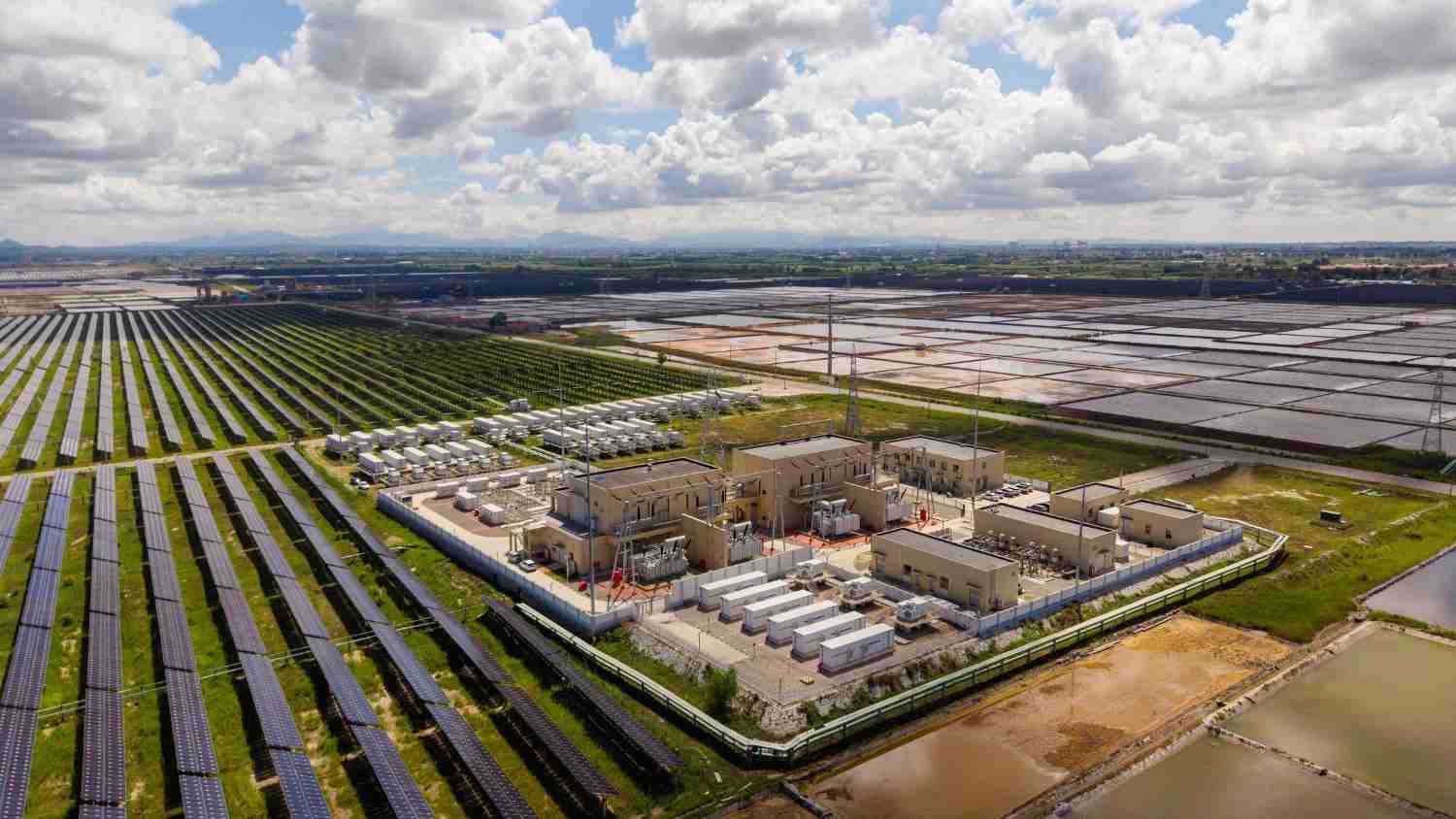
India’s solar and wind build-out has outrun the wires meant to carry it. The Green Energy Corridor Phase III BESS program, cleared by the Union Cabinet on September 30, 2026, is the government’s most direct fix. It ties intra-state transmission upgrades to the first dedicated storage component in the corridor program. For EPC firms and integrators, that’s a funded pipeline with a firm end date: FY 2032-33.
Did You Know? GEC-III has a total outlay of ₹1,86,405 crore, roughly US$19.3 billion. It aims to evacuate up to 135 GW of renewable energy and add 50 GWh of battery storage.
What the Green Energy Corridor Phase III BESS Scheme Funds
Think of the money in two buckets. The bigger one builds the grid. The smaller one builds storage.
| Component | Allocation |
| Total outlay | ₹1,86,405 crore |
| Intra-state transmission (InSTS) | ₹1,36,378 crore |
| Battery storage (50 GWh) | ₹50,000 crore |
| Central financial support | ₹54,082 crore |
| Target completion | FY 2032-33 |
Greenfield transmission is expected to move through tariff-based competitive bidding. For contractors, that means open, price-sensitive tenders rather than nominated awards. The scheme also backs India’s goal of 900 GW of non-fossil capacity by 2035.
Why Renewable Energy Evacuation Infrastructure Is the Real Bottleneck
Generation isn’t the hard part anymore. Rajasthan, Gujarat, and Karnataka host enormous solar and wind clusters, but the demand sits hundreds of kilometers away. When state-level lines and substations fall behind, clean power gets curtailed, or projects never get built.
Developers have pointed out that much of the constraint lives at the state level, and GEC-III goes after exactly that layer. Better renewable energy evacuation infrastructure inside states means more projects can connect, less energy goes to waste, and lenders see lower interconnection risk.
Storage helps in a second way. A battery near a transmission node can soak up midday solar surplus and release it at the evening peak. That eases congestion without a new line for every peak hour.
How BESS Viability Gap Funding India Shapes Project Economics
Central support for storage didn’t begin with GEC-III. The first VGF tranche backed 13,220 MWh with ₹3,760 crore. The second set aside ₹5,400 crore for 30 GWh, at ₹18 lakh per MWh. Rajasthan, Gujarat, and Maharashtra got 4 GWh each, while Karnataka and Andhra Pradesh got 2 GWh each.
Auctions followed. Standalone tenders have closed in Rajasthan, Karnataka, Tamil Nadu, Telangana, and Gujarat, and Rajasthan’s state generator wrapped up a 1 GW/2 GWh auction at a record-low tariff. Cheaper batteries made that possible. Analysts also warn that very low bids can strain project viability.
So what does this mean for you? BESS viability gap funding in India makes projects easier to finance. GEC-III shifts storage into the grid itself. Bidders who understand both layers will price more accurately than those who see only one.
Reading the GEC-III Battery Energy Storage Allocation
The GEC-III battery energy storage allocation is a 50 GWh envelope placed inside intra-state transmission networks. That location shapes the work. Storage will sit near substations and renewable pooling points, so the scope goes well beyond battery containers.
Expect demand for:
- Substation extensions and new bays
- Power conversion systems, transformers, and switchgear
- Evacuation lines at 220 kV and above
- SCADA, protection, and energy management integration
- Civil works, earthing, and fire safety systems
Every item on that list is a bid opportunity for contractors with real substation experience.
Strategic Insights for EPC Firms and BESS Integrators
From how earlier transmission programs played out, state-level execution capacity usually decides who wins. A few moves are worth making now.
- Track state transmission plans. Projects flow through state utilities, so early visibility beats chasing tenders after they drop.
- Bundle transmission and storage skills. Utilities like fewer interfaces. A contractor who can deliver the substation and the battery behind it cuts coordination risk.
- Guard your margins. Competitive bidding rewards discipline, not the lowest number. Be honest about equipment, logistics, and delay costs.
- Stack incentives sensibly. Where BESS viability gap funding in India still applies, combine it with the new storage envelope instead of treating them as rivals.
- Build land and right-of-way expertise. Corridors fail on permits more often than on engineering.
Pro Tip: Start prequalification paperwork now. Utilities check past 220 kV, 400 kV, and 765 kV references first, and gathering certificates takes weeks.
Treating the Green Energy Corridor Phase III BESS opportunity as a battery-only story. Without matching transmission capacity, stored energy has nowhere to go.
Risks to Plan For
A pipeline this big carries real risk. Keep an eye on:
- Delays in power purchase agreements and offtake finalization
- Right-of-way disputes and land acquisition timelines
- Tariff compression that squeezes contractor margins
- Supply chains for cells and power electronics
- Uneven readiness among state utilities
Smart bidders price these into contracts instead of hoping they go away.
Where Grid EPC Experience Counts
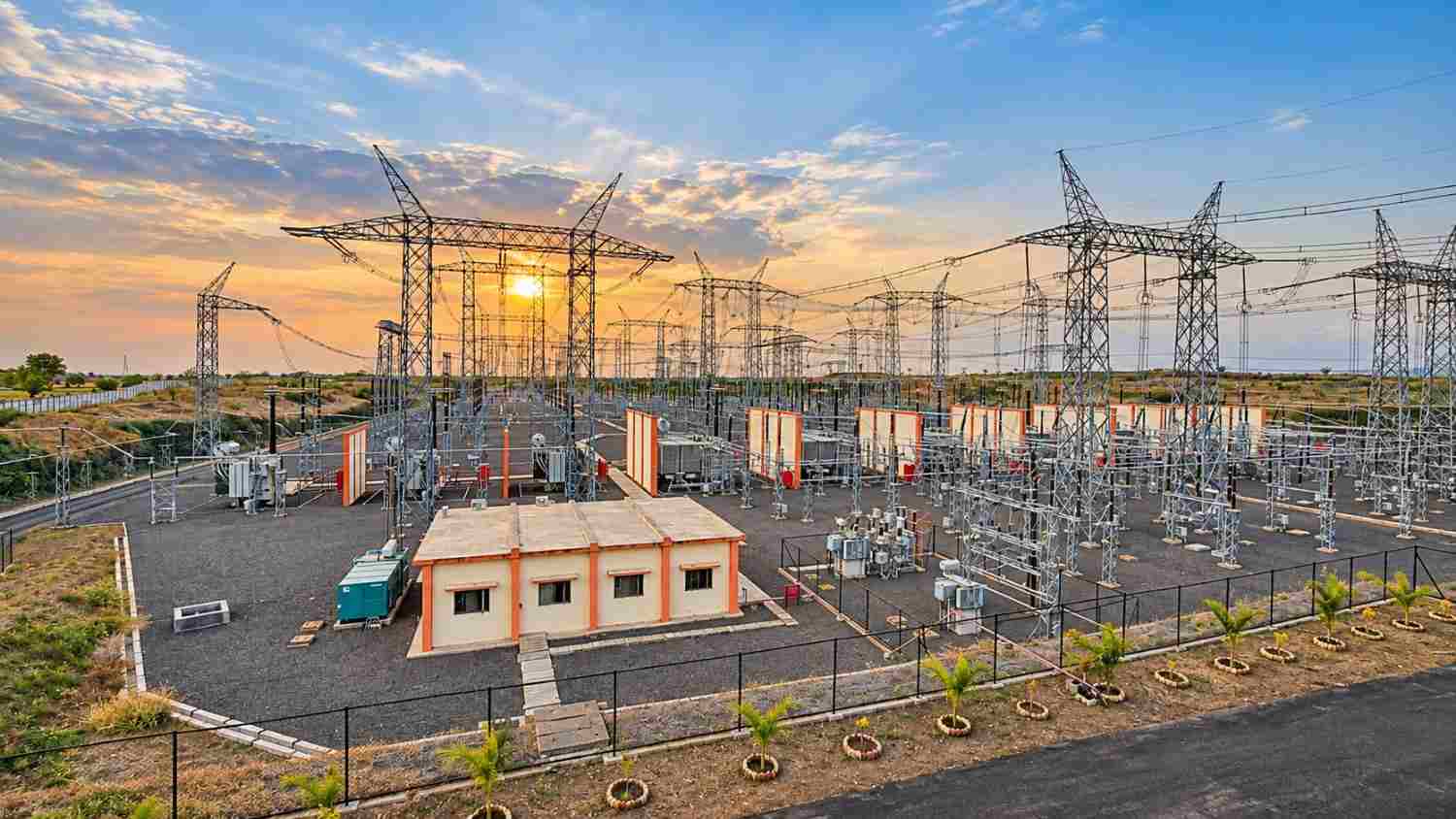
Funding is half the story. Delivery is the other half. Hartek Group has worked in India’s power sector since 1991 and ranks among the country’s top three solar EPC companies. Its record includes 10 GW+ of solar connected to the grid, 400+ EHV and HV substations, and grid infrastructure up to 765 kV across 21+ states.
The project list backs that up. It includes a 765 kV PGCIL project in Andhra Pradesh and a 220 kV/250 MW project for O2 Power in Rajasthan, a state at the heart of India’s storage push. As India builds the renewable energy evacuation infrastructure its clean energy goals demand, experienced EPC partners will turn policy money into energized assets.
Strengthen Your Green Energy Corridor Project Execution!
GEC-III turns years of grid congestion into a funded, time-bound build program. The winners won’t be the loudest bidders. They’ll be the ones with substation depth, clean prequalification files, and a realistic view of state-level delivery.
If your team is sizing up transmission or storage packages under this scheme, Hartek Group can help you move from planning to energization. Reach out through hartek.com to talk about your project.
Key Takeaways
- GEC-III commits ₹1,86,405 crore, including ₹50,000 crore set aside for 50 GWh of battery storage.
- Weak intra-state transmission is the main bottleneck, and the scheme targets that specific layer directly.
- Competitive greenfield bidding rewards cost discipline and proven execution records more than aggressive pricing alone.
- Offering transmission and storage together reduces coordination risk and simplifies project delivery for state utilities.
- Early prequalification and state-level tracking give EPC firms a real edge before tenders are published.
FAQs
- What is GEC-III?
GEC-III is the third phase of India’s Green Energy Corridor program. It strengthens intra-state transmission to evacuate up to 135 GW of renewable energy and adds dedicated battery storage.
- How large is the storage component?
It totals ₹50,000 crore for 50 GWh of battery energy storage systems, part of a ₹1,86,405 crore scheme running to FY 2032-33.
- How does the GEC-III battery energy storage allocation differ from earlier VGF tranches?
Earlier tranches subsidized standalone storage tenders. The GEC-III allocation places storage inside intra-state transmission networks as part of a wider grid program.
- Who benefits from the scheme?
Transmission EPC contractors, storage integrators, equipment makers, and renewable developers all gain from better evacuation and lower curtailment.
- What are the main risks?
Right-of-way delays, tariff compression, offtake agreement delays, and uneven state utility readiness are the biggest ones.
Share:


