
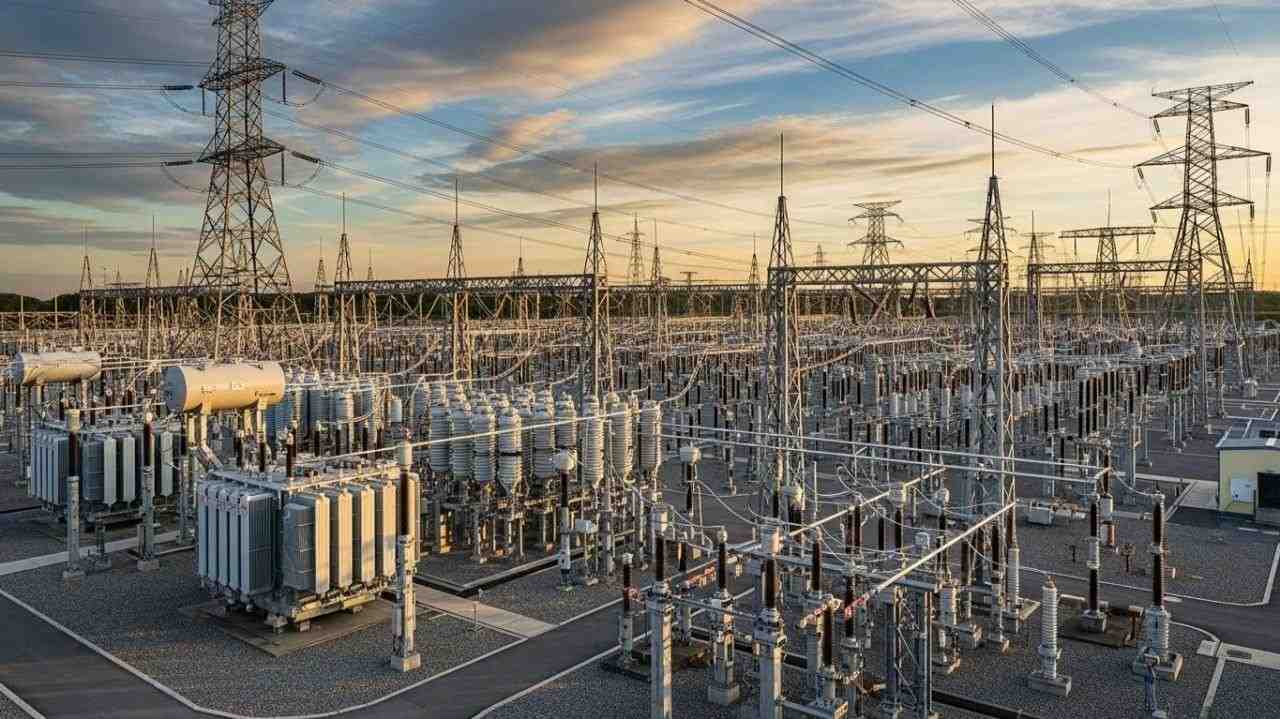
India’s clean energy race is no longer just about adding gigawatts. It is about whether the grid can carry, balance, and stabilize every one of them. Renewable energy grid stability India now decides whether a new solar or wind plant delivers power or sits waiting behind a jammed transmission line. Installed capacity grew from about 382 GW in April 2021 to over 520 GW by January 2026, and non-fossil sources passed the 50% mark in June 2025. The wires, storage, and operating rules behind all that capacity haven’t kept pace. Reaching the India 500 GW non-fossil target on paper is one thing. Keeping the lights steady on the way there is another.
Did You Know? India’s peak demand hit an all-time high of 256 GW in late April 2026. Between May and November 2025, roughly 23 GW of renewable capacity was curtailed nationally just to protect grid safety.
What the FICCI-Nangia Report Found
A joint FICCI-Nangia report, Grid Stability in India: From Diagnostic Assessment to a Reform and Implementation Roadmap, argues for something simple. Capacity targets should come with matching grid-stability milestones.
Why? The grid was built around big coal, gas, and hydro stations. Those spinning machines give the system inertia and strength almost for free. Solar and wind plug in through power electronics, which behave differently. So the grid gets less built-in support right when demand is climbing.
The report flags eight areas of stress:
- Frequency and inertia
- Voltage and system strength
- Power quality and protection
- Oscillations
- Forecasting and congestion
- Resilience and black-start
- Modeling capability
- Cyber-physical security
From there, it lays out 14 priority actions across four levers: technical, regulatory, market, and institutional.
Why Renewable Energy Grid Stability India Can’t Wait
Think of grid frequency as the system’s pulse. India runs at 50 Hz. When supply and demand drift apart, that pulse wobbles. Heavy spinning turbines slow the wobble down and buy operators a few precious seconds. Take away some of that mass, and the seconds shrink.
Stability problems rarely announce themselves. They creep in as faster frequency swings after a fault, weaker voltage in renewable-rich regions, and operators holding back generation just to stay safe. The fallout reaches the wider economy:
- A higher risk of tripping and cascading outages
- Less output from plants that are already built
- Delays in commissioning new projects
- Shakier investor confidence in the energy transition
The paper makes a pointed observation here. Grid stability directly shapes investor confidence. Money follows reliability.
Renewable Energy Curtailment India: The Clearest Warning Sign
Curtailment is what happens when clean power is ready, but the system can’t take it. It’s no longer a small issue. CRISIL Ratings estimates that more than 35 GW of renewable capacity faces curtailment risk in FY 2026-27 because of limited long-term transmission access. ICRA reviewed 54.8 GW of recently commissioned capacity and found curtailment reaching 50 to 60 percent during solar hours for projects on temporary access, mostly in Rajasthan and Gujarat. In Rajasthan, it once spiked as high as 51.5 percent.
Ember estimates that about 470 GWh was lost to transmission constraints alone in the first quarter of 2026. And new lines don’t automatically solve it. The report cautions that added transmission capacity by itself doesn’t guarantee relief. So renewable energy curtailment in India turns out to be a wires problem, a flexibility problem, and a timing problem all at once.
Battery Energy Storage for Grid Stability: Closing the Flexibility Gap
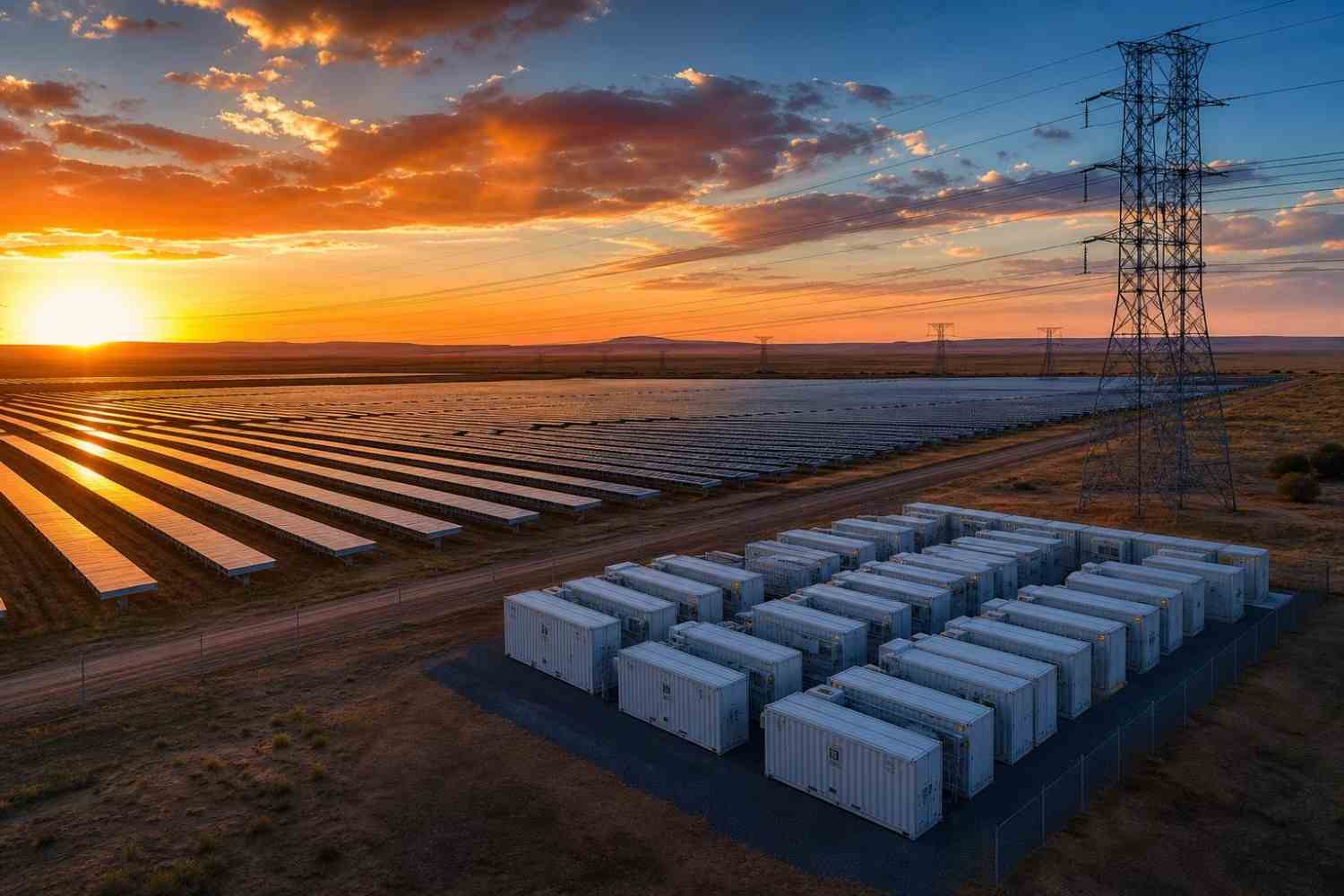
Battery Energy Storage Systems (BESS) move midday surplus into the evening peak. They react in milliseconds to a frequency dip. Placed near congested pooling stations, they also take pressure off the lines.
There’s a newer twist. Grid-forming inverters don’t just follow the grid’s signal; they help set it. Discussion-paper modeling of the all-India system, focused on Rajasthan’s large renewable complexes, showed they can mimic an inertia-like response, limit the rate of change of frequency, and improve voltage recovery after a fault. India has already acted on this. The Central Electricity Authority’s 2026 Construction Standards require grid-forming capability in battery storage above 50 MW.
The report calls that mandate necessary but not sufficient. It suggests pairing it with a competitively priced market for stability services, the way the UK and Australia have done. Otherwise, grid-forming compliance stays a plain project cost.
Hartek Group describes BESS as a way to store surplus power at peak production and supply steady power when demand rises or generation dips, while cutting fossil fuel dependence. That’s why battery energy storage for grid stability belongs in the core infrastructure conversation, not on the sidelines.
Pro Tip: Storage earns its keep where evacuation is tight. Planners should start with pooling stations in Rajasthan and Gujarat.
Milestones India Should Track Now
Megawatt targets alone won’t cut it. Stability milestones give operators and investors something solid to plan around. A practical list might include:
- Inertia and frequency: Notified minimums for system inertia and rate of change of frequency.
- System strength: Clear standards for renewable-rich zones.
- Transmission timing: Commissioning schedules that actually match generation build-out.
- Grid-enhancing technologies: Dynamic congestion management on stressed corridors.
- Storage rules: Consistent definitions and thresholds for BESS above 50 MW, plus a paid market for stability services.
- Testing and cybersecurity: Common checks before equipment connects.
A solar plant that can’t dispatch is a stranded asset, no matter how clean its output. Tying these milestones to the India 500 GW non-fossil target turns a capacity goal into an operating plan.
Key Takeaways
- Capacity alone isn’t enough; India needs matching milestones for inertia, system strength, and transmission timing.
- CRISIL estimates over 35 GW of renewable capacity faces curtailment risk in FY 2026-27 from limited transmission access.
- Grid-forming batteries can restore stability as thermal plants step back, but they need a market to support them.
- The FICCI-Nangia roadmap groups 14 actions across technical, regulatory, market, and institutional levers.
- Coordinated planning across utilities, regulators, and engineering firms decides how much clean power reaches consumers.
Challenges That Could Slow Progress
- Transmission delays: Lines take longer to build than solar farms. Over the past five years, India delivered only around 80 percent of its annual transmission targets, so the backlog keeps growing.
- A thermal fleet still learning to flex: Older coal units struggle to ramp down at midday, and that limits room for solar.
- Modeling and skills gaps: Operators need stronger simulation tools for inverter-heavy grids so they can spot trouble before it hits.
- Cyber-physical risk: A grid packed with converters and digital controls simply has more doors to guard.
None of these is unfixable. But they need to be tackled together. Real progress on renewable energy grid stability in India depends on treating them as one program, not five separate projects.
Powering What Comes Next!
The next chapter of India’s energy transition will be judged by uptime, not just installed gigawatts. Delivery muscle matters. Hartek Group has connected over 10 GW of solar to the grid, built 400+ EHV and HV substations, and delivers grid infrastructure up to 765 kV across 21+ states. That blend of substation, transmission, solar, and storage experience is what a stability-first buildout calls for. Strengthening renewable energy grid stability in India is the most practical way to protect every clean gigawatt already in the ground.
Frequently Asked Questions
- What is grid stability?
It’s the power system’s ability to hold steady frequency and voltage after a disturbance, so supply keeps flowing even as generation and demand shift every second.
- Why do high shares of solar and wind affect stability?
Solar and wind connect through power electronics and offer less natural inertia than coal, gas, or hydro plants, so frequency and voltage can move faster after a fault.
- What causes curtailment in India?
Mostly transmission delays, thermal plants that can’t ramp down easily, and heavy midday solar output. Ember estimates about 470 GWh was lost to transmission limits alone in Q1 2026.
- How do batteries help the grid?
They store midday surplus, release it in the evening peak, respond fast to frequency dips, and relieve congested corridors near renewable-rich regions.
- What are grid-forming inverters?
They actively set voltage and frequency references instead of just following the grid, which helps weaker networks stay steady as conventional plants retire.
Share:


