

India is entering a defining economic decade. As manufacturing scales up, digital infrastructure expands, urbanization accelerates, and clean energy adoption gains momentum, the power infrastructure sector is emerging as a critical foundation for sustained economic growth.
For a long time, the discussion around infrastructure was mostly about roads, ports, and railways. However, a power infrastructure capable of meeting the needs of industries, cities, data centers, electric vehicles, and renewable energy is going to be the key to the next chapter of India’s growth story. This is why power infrastructure is gaining recognition as India’s economic moat or a source of competitiveness and sustained GDP growth through a strong competitive advantage.
As the country moves toward its Vision 2030 goals, investment in power sector in India is expected to become one of the most important drivers of economic expansion. The companies building transmission networks, substations, renewable integration systems, and grid modernization projects today will play a critical role in shaping tomorrow’s economy.
“Did You Know? According to recent industry estimates, India’s grid and transmission infrastructure pipeline has expanded to nearly ₹9 trillion, driven by record power demand, renewable energy additions, and the need for stronger transmission networks. Peak electricity demand has already touched approximately 270 GW, highlighting the scale of infrastructure required to support future growth.”
Why Infrastructure Capex Is Becoming India’s Growth Engine
In the past, the consumption and services sectors contributed majorly to India’s GDP growth. But to get India to the developed economy status, focus on infrastructure investment will be expanded.
That is precisely what the government’s persistent focus on capital expenditure implies. They are even reaching new highs with infrastructure investments where transport, energy, logistics, and industrial corridors have been given the most significant allocations. Infrastructure-led growth has been shown as a strategic priority for the next decade through recent budget announcements as well.
Out of all infrastructure categories, power is particularly significant because reliable electricity is a fundamental necessity for every economic activity. Manufacturing plants require power without any interruptions. Data centers depend on grid connectivity that is stable. Metro networks, airports, EV charging stations, and industrial parks cannot operate efficiently without a resilient electrical backbone.
This makes energy infrastructure in India more than a utility sector, it becomes an economic multiplier that enables growth across every industry.
The 2030 Vision: Powering India’s Next Economic Leap
India’s aspirations to grow its economy by 2030 go hand in hand with its energy ambitions. On one hand, it pushes for a 500 GW non-fossil fuel capacity target while on the other, it prepares for a substantial increase in electricity demand resulting from industrialization, electrification and digital adoption. The government’s forecast shows non-fossil power capacity continuing to expand rapidly even after 2030, which is a clear indication of the scale of transformation.
However, adding generation capacity alone is not enough.
The real challenge lies in:
- Building transmission networks to evacuate renewable power.
- Strengthening substations for grid stability.
- Modernizing distribution infrastructure.
- Integrating energy storage systems.
- Managing fluctuating renewable generation efficiently.
This is where the next capex cycle becomes particularly important. Unlike previous infrastructure booms focused primarily on physical transportation assets, the upcoming cycle will involve large-scale investments across the entire electrical value chain.
Why Power Infrastructure Creates a Sustainable Economic Moat
An economic moat can be defined as a long-lasting competitive advantage that is hard to imitate. India’s power infrastructure, in many ways, fits this description.
1. Enabling Manufacturing Growth
Their set of industrial development programs has been supported by reliable electrical supplies. When global manufacturers rank potential production hubs, they find power quality, grid reliability, and energy costs to be some of the main deciding factors. In fact, good power infrastructure mitigates operational risks and increases industrial competitiveness. As manufacturing clusters spread throughout the country, they will spur the need for substations, transmission lines, switchyards, and grid connectivity.
2. Supporting Renewable Energy Expansion
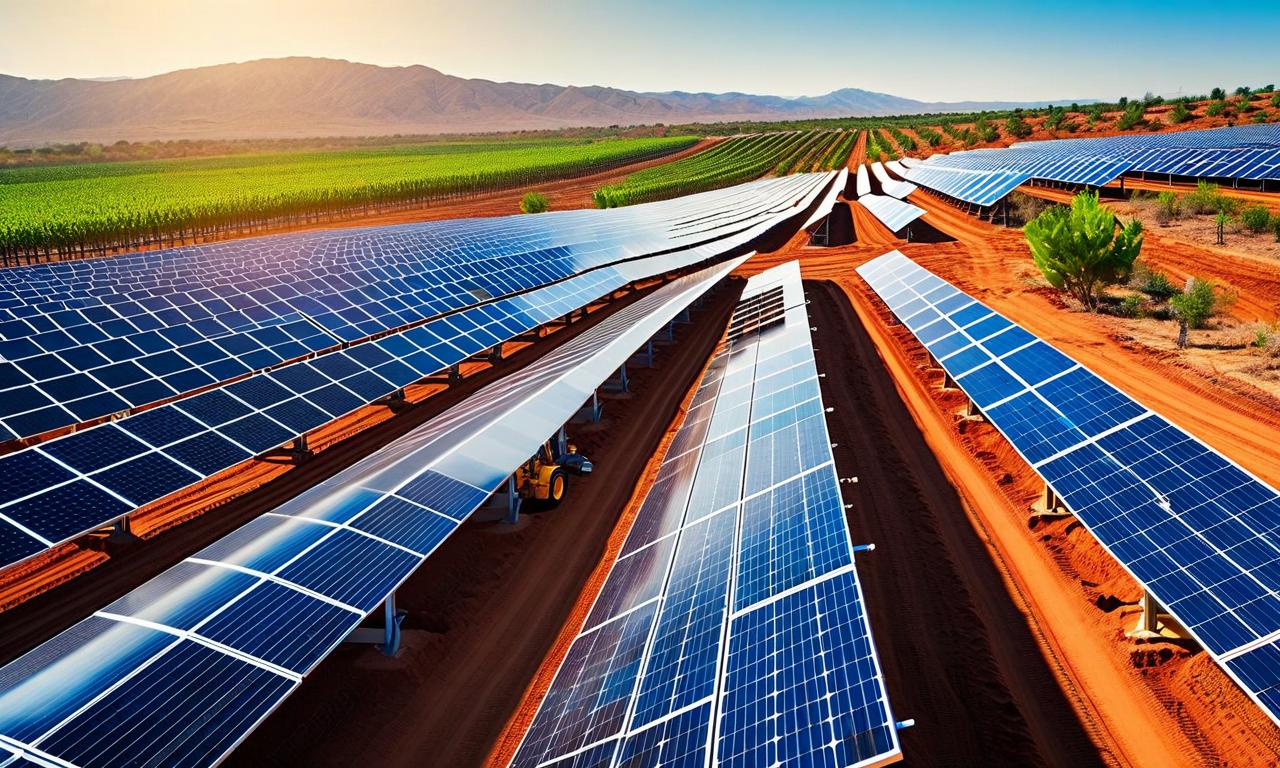
The renewable energy sector growth story is impossible without transmission growth. Solar and wind farm developments usually exist at distances far removed from consumer centers.
Therefore, the energy produced in resource-rich areas must be transmitted accurately to the main consumption hubs of the cities and industries. Hence, one must make substantial commitments in the area of:
- High-voltage transmission corridors
- Grid balancing infrastructure
- Renewable energy pooling stations
- Smart monitoring systems
- Advanced substations
One cannot quite utilize the renewable generation capacity in its entirety without these investments.
3. Meeting Rising Power Demand
The trajectory of India’s need for electricity continues its upward curve.
International energy assessment reports indicate significant increases in national peak loads over the past decade as a result of the rising demand for cooling, increased industrial activity and spread of electricity access.
There are some newly emerging demand drivers, for instance:
- Electric vehicles
- Data centers
- Green hydrogen production
- Advanced manufacturing
- Urban infrastructure
- Digital services
Power infrastructure is an indispensable element in the ability of all these sectors to reach their full potential.
4. Attracting Long-Term Capital
Investment in the power sector in India is turning into a big-ticket item for institutional investors, sovereign funds, pension funds, and those focusing on infrastructure capital. This is because infrastructure investors have been eyeing power assets as pretty good long-term opportunities.
The policy moves recently made by the government, are in fact preparing the private capital to be unlocked in the infrastructure creation sector through mechanisms such as asset monetization programs and transmission expansion plans.
Additionally, the government has introduced Inter-State Transmission System (ISTS) exemptions, which allow certain renewable energy projects to connect to the interstate transmission network without paying transmission charges for a specified period. This move is aimed at encouraging large-scale renewable energy development, reducing project costs, and attracting long-term investments by improving the viability and bankability of power projects. The ISTS exemptions, therefore, provide another incentive for institutional investors and infrastructure-focused funds to channel capital into India’s power sector.
As a result, investment in power sector in India is becoming a major theme for institutional investors, sovereign funds, pension funds, and infrastructure-focused capital.
The Transmission Revolution: The Hidden Growth Story
Renewable energy facilities have been grabbing the headlines but when it comes to investment opportunities in the entire energy ecosystem, transmission infrastructure is on its way to becoming one of the really big players.
According to industry sources, India is gearing up for a huge transmission expansion involving new transmission lines, substations, and grid modernization initiatives that will be worth a significantly high amount over the coming years.
The reasons are really quite simple:
- The generation of renewable energy is increasingly happening everywhere rather than in a few concentrated spots.
- The geographical spread of demand centres is also a factor.
- The resilience of the grid is one of the things the authorities are working on.
- There is an uptick in inter-regional power transfers.
- Growing digitization of power networks has elevated the importance of Cyber-Physical Grid Security, driving investments in secure communication systems, real-time monitoring, and protection against both cyber and physical threats.
Transmission infrastructure is therefore evolving from a support function into a strategic growth driver, serving as the backbone for renewable integration, energy security, grid reliability, and the development of a smarter, more resilient power system.
Power Infrastructure and Capital Markets: The Emerging Narrative
Capital markets are starting to look at this opportunity in a structural way rather than simply as something cyclical.
Power infrastructure, unlike consumer goods sectors that are dependent on consumer confidence, has the advantage of having a clear visibility of demand spread over many decades. Besides, the combination of policy support, industrial growth, renewable expansion, and electrification leads to an investment cycle of longer duration rather than a short-term boom.
This is the main reason why companies involved in transmission, substations, switchgear, grid modernization, and renewable integration are keeping the focus of investors heightened.
Infrastructure investment will continue to be a major contributor to GDP formation, employment creation, industrial productivity enhancement, and energy security in India as the country gets closer and closer to achieving its Vision 2030 goals.
Building the Foundation for India’s Energy Future
It won’t be just how much power India can generate, but more so how well India can transmit, manage, and deliver that power will define India’s next phase of growth story.
Reliable energy infrastructure in India will determine whether renewable targets are achieved, manufacturing competitiveness improves, and digital growth remains sustainable. This transformation requires engineering excellence, execution capabilities, and deep expertise across the power value chain.

Thus, at the start of this historic capex cycle in India, organizations with proven expertise in substations, transmission systems, grid connectivity, and renewable EPC execution will play a vital role in shaping the country’s future. At Hartek Group, we are proud to contribute to this transformation through our work in power systems, renewable energy integration, and transmission infrastructure. By building resilient and efficient energy networks, we are helping support India’s long-term economic ambitions and growing energy needs.
As infrastructure investment continues to be a key driver of GDP growth through 2030 and beyond, we remain committed to delivering the electrical backbone that will power the nation’s future and enable sustainable development at scale.
Key Takeaways
- Power infrastructure is becoming the foundation of India’s next economic growth cycle.
- India’s increasing need for electricity is generating unprecedented opportunities in the transmission and grid modernization industries.
- The expansion of renewable energy is dependent almost entirely on the availability of appropriate transmission and substation infrastructure.
- The surge in investment in India’s power sector is attracting an influx of long-term institutional capital.
- Through infrastructure-led growth, power networks will establish themselves as a strategic economic moat even through 2030.
Frequently Asked Questions (FAQs)
1. Why is power infrastructure considered India’s economic moat?
Through power infrastructure India supports all significant sectors of its economy, manufacturing, transportation, digital services and renewable energy. Robust electric networks create long-term competitive advantages that are very difficult to copy.
2. How does investment in the power sector in India contribute to GDP growth?
Investment in infrastructure will create jobs, provide stimulus for the industrial sector, improve productivity and attract more private investment. Together, these factors constitute higher overall output and GDP expansion.
3. What is driving renewable energy sector growth in India?
Accelerating renewable energy adoption in India has been propelled by government targets, decreasing renewable energy cost, energy security considerations, and growing sustainability commitments of corporations.
4. Why is transmission infrastructure becoming so important?
Because renewable energy projects are usually located away from demand centers. The transmission infrastructure ensures that power delivery is done efficiently while maintaining grid reliability and stability.
5. What role will power infrastructure play in India’s 2030 vision?
Without power infrastructure, industrial growth, renewable energy integration, digital transformation, urban development, and electrification will not be possible. This is why it is seen as one of the most critical pillars of the country’s development agenda.
Share:


