
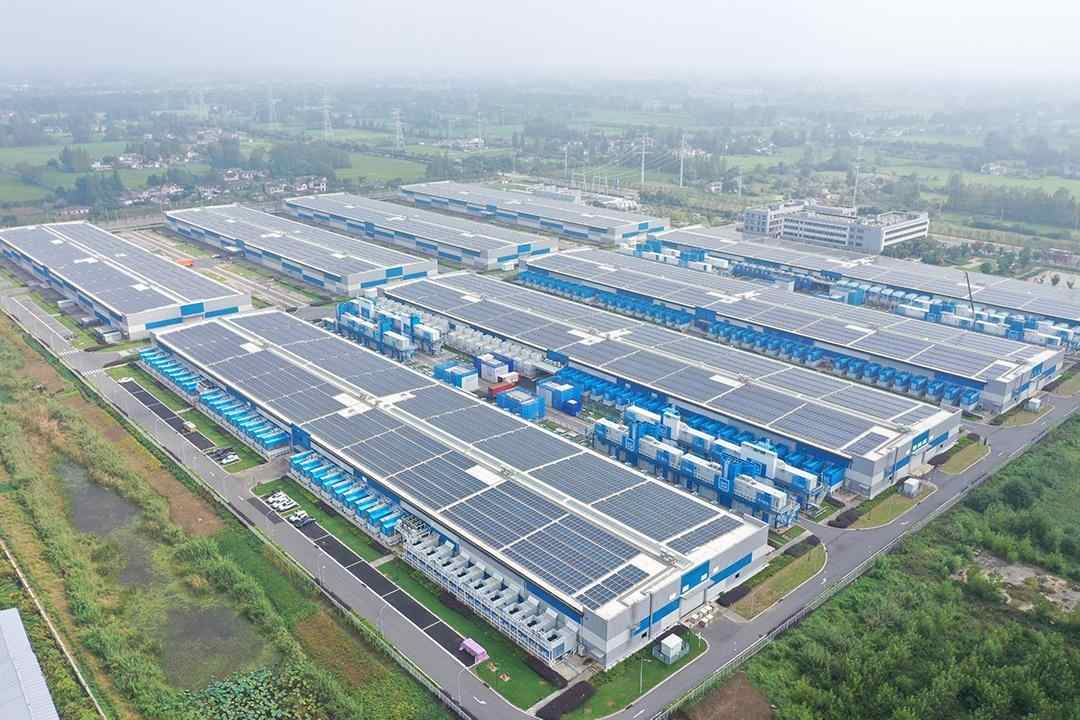
India’s digital economy is growing faster than the infrastructure behind it. AI workloads, cloud adoption, and data localization are turning hyperscale campuses into a national priority. Behind every server rack sits a harder question: can the electricity, water, and land keep pace? For data centre power infrastructure in India, that question now sits at the center of growth.
In October 2026, NITI Aayog’s Frontier Tech Hub released the Data Centre Evaluation Framework. It gives states a common yardstick for judging proposals before approval. This blog explains what the framework says and what it means for the green hyperscaler of tomorrow.
Did You Know? India’s data center capacity has grown from roughly 375 MW in 2020 to about 1.5 GW today, driven by AI, cloud computing, and data-intensive applications. The government has also announced a tax holiday until 2047 for eligible foreign cloud service providers using India-based data center infrastructure. Capacity is arriving fast, so planning for power and water has become urgent.
What Is NITI Aayog’s Data Centre Evaluation Framework?
The framework was released on October 14, 2020. It was developed with inputs from industry, MeitY, the Ministry of Power, and DPIIT. It is a decision-support tool for state governments, not an extra layer of regulation. States can adapt it to their own priorities and resources.
It rests on five pillars:
- Power and Energy
- Water and Cooling
- Siting and Environmental Sustainability
- Economic and Strategic Value
- Policy, Governance and Implementation
The core message is simple. States should stop competing on investment announcements and start competing on investment readiness. Approvals and incentives should follow verified infrastructure, not headline megawatts.
Why Data Centre Power Infrastructure in India Needs a Planning Reset
Power is the first pillar for good reason. A large campus can reshape a local network. The framework asks states to assess the full campus at the node and corridor level instead of reviewing each phase in isolation.
Its key asks include:
- A Power Readiness and Ramp-up Plan, jointly validated by the developer, the DISCOM, and the State Transmission Utility
- Load-flow studies covering feeder limits, voltage sag, power factor, and N-1 and N-2 contingency
- Classification of each facility as colocation, AI/HPC/GPU compute, or hybrid, since their power and cooling needs differ
- Automated demand-response readiness and SLDC telemetry for facilities above 20 MW
The framework also treats large data centers as grid-interactive loads that can ease consumption when the grid is stressed. That is a meaningful shift. These campuses are no longer seen as passive, always-on consumers.
Building a Green Data Centre in India Through Sustainable Practices
A green data centre in India is not defined by a sustainability brochure. The framework makes sustainability measurable. Developers must provide a modeled design PUE and a guaranteed operating PUE. They must also report CUE and site-level greenhouse gas emissions, including those from backup generation and refrigerants. BEE, BIS, and MeitY are asked to standardize how PUE, WUE, and CUE are measured.
Diesel reliance also comes under review. The framework calls for a phased roadmap to cut it through BESS, green hydrogen, or sustainable biofuels where technically feasible, without compromising redundancy. Hyperscale facilities should assess waste-heat utilization as well.
Water gets equal weight. States are asked to protect existing users, require recycled or alternative sources in stressed basins, and evaluate cooling options such as liquid, closed-loop, and immersion systems.
Renewable Energy for Data Centres in India: From Pledges to Verified Supply
Clean energy claims are easy to make and harder to prove. The framework recognizes renewable and storage-backed reductions in grid draw only when the details are confirmed. These include hourly or time-block matching, contracted quantum, commissioning, connectivity, metering, and usable discharge capacity. States then record net grid draws at each milestone.
States are also encouraged to promote firm captive or open-access renewable-plus-storage supply, and to prescribe a minimum renewable share where applicable. At the national level, the Ministry of Power and CERC are asked to publish model green-tariff, banking, and open-access principles for round-the-clock supply.
Smart siting matters too. The framework suggests prioritizing renewable-rich zones with good connectivity, which limits long-distance transmission. A credible approach to renewable energy for data centres India therefore depends on contracts, storage, and wires working together.
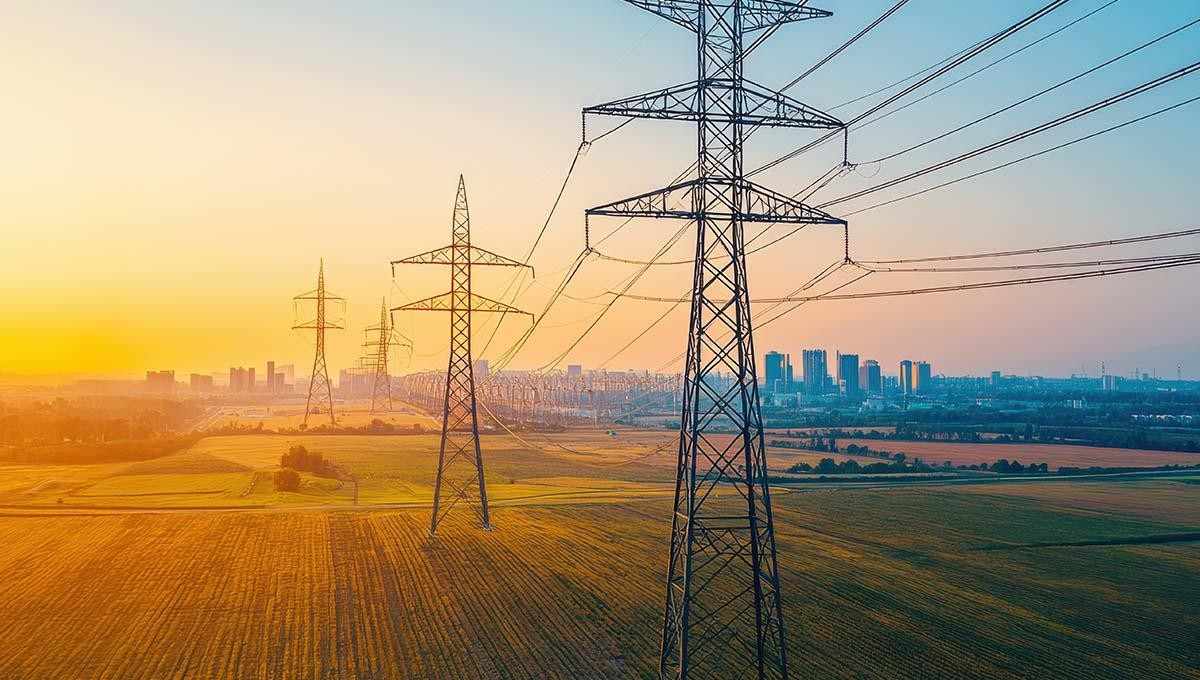
Data Centre Grid Connectivity in India: Zones, Substations, and Timelines
Land is easy to find. A ready connection is not. The framework asks states to designate data-centre-ready zones after verifying land title, zoning, expansion headroom, and substation readiness. Zones prone to hazards, water stress, or weak infrastructure can be marked as red zones.
On the power side, data centre grid connectivity India gets practical treatment:
- Network-reinforcement studies separate data-center-driven upgrades from normal demand growth
- Shared upstream costs are allocated by beneficiary, contracted load, and utilization
- Load enhancement is approved only after the assets are commissioned and agreed milestones are met
- States publish a power-infrastructure roadmap with indicative energization timelines for each site or corridor
- Dual feeds need independent upstream sources and extra-high-tension resilience
A digital single-window approval system and a state-wise approval matrix round out the picture. Together they make timelines predictable for developers.
Key Takeaways
- NITI Aayog’s framework helps states judge data center proposals on readiness, not announcements.
- Power and Energy is the first of five pillars, covering full-campus load, grid upgrades, and net grid draw.
- Renewable supply counts only when it is contracted, connected, metered, and time-matched.
- Ready zones, clear cost sharing, and published timelines reduce delays.
- Strong grid engineering partners will shape how fast India’s data center capacity scales.
Challenges Ahead
The framework is sound, but execution is where projects succeed or stall.
- Long lead times: Substations and transmission lines take years, while server halls can be built in months
- Coordination gaps: Developers, DISCOMs, transmission utilities, and water authorities must work from one plan
- Verification: Renewable and storage claims need metering, and not just contracts
- Cost sharing: Upstream upgrades must be allocated fairly among users
Powering the Green Hyperscaler Era
The framework sends a clear signal. Sustainable data center growth begins with power that is planned, firm, and verifiable. As states adopt these principles, demand will rise for engineers who can deliver high-voltage networks on schedule.
That is where deep grid expertise counts. Hartek Group’s Power Systems business unit has completed 400+ EHV and HV substation projects across 21+ states and works at voltages up to 765 kV. The group has also connected more than 10 GW of solar to the grid. As India builds out data centre power infrastructure in India can trust, experience in substations, transmission, and renewable integration will be a real advantage.
FAQs
- What is the Data Centre Evaluation Framework?
It is a decision-support framework from NITI Aayog’s Frontier Tech Hub. It helps states assess data center proposals across power, water, siting, economic value, and governance.
- Does the framework create a new regulation?
No. It offers common assessment principles that states can adapt, without adding a statutory approval layer.
- Who developed it?
The NITI Frontier Tech Hub prepared it with inputs from MeitY, the Ministry of Power, DPIIT, and industry.
- How does it treat renewable energy claims?
Reductions in grid draw count only when matching, contracts, commissioning, connectivity, and metering are confirmed.
- Why does the grid matter so much?
Large campuses need firm power at every capacity stage. Without timely substation and transmission upgrades, projects stall even when land and capital are ready.
Share:


