Why Every Substation Needs a Reliable Control Relay Panel

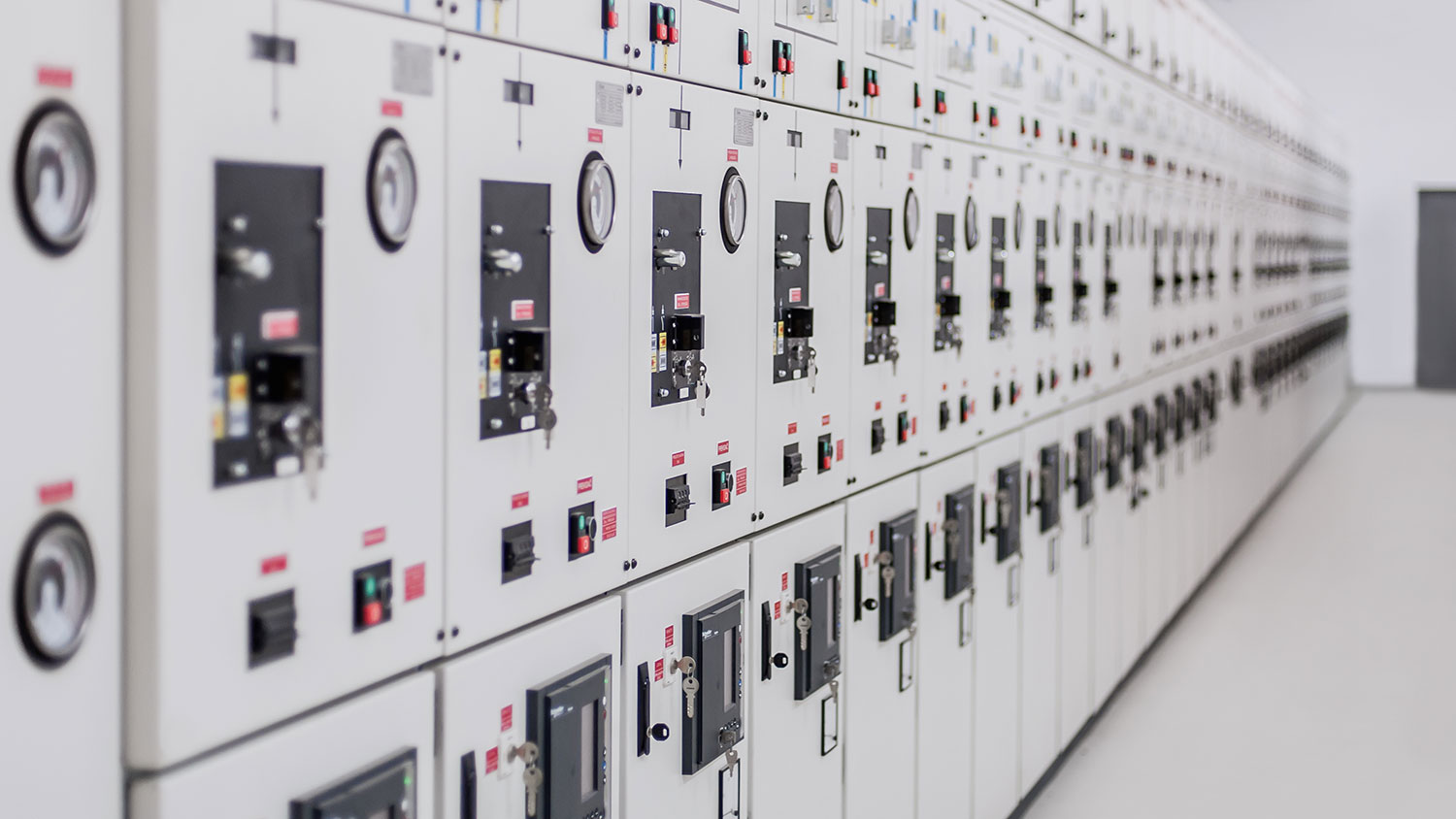
It is not just major transformers or heavy switchgear that constitute the backbone of a stable and efficient power infrastructure, but the invisible intelligence that ensures safety, synchronization, and operation. This intelligence is provided by a Control Relay Panel (CRP), a vital part of any modern electrical substation.

The need for reliable and advanced control and relay systems has grown immensely in parallel with the process of India’s electrification network’s reinforcement and the transmission infrastructure spreading across the districts. Whether it is a control and relay panel in a substation, a 132 kV control relay panel, or a 220 kV control relay panel, these solutions form the nerve centre of grid protection.

Hartek, one of India’s leading engineering, grid-synchronisation, and substation solution providers, continues to empower the country’s electrical ecosystem with high-quality, technologically advanced relay and control panels that deliver reliability, safety, and precision.

India’s Power Infrastructure Expansion: A Stronger Case for Control Relay Panels

India’s power transmission network has been growing rapidly over the last few years, with a substantial increase in the kilometers of new transmission lines and the number of substations on an annual basis. Rising industrial demand, urbanization, and renewable energy generation have led to the need for substations capable of handling higher electrical loads while ensuring the stability of the network.

In such a situation, the Control Relay Panel is the brain of the substation, where all the surveillance and protection activities are carried out. It is the main instrument by which the entire substation can be made safer and more reliable in case of fault situations.

If we consider the increasing complexity of power grids due to the incorporation of renewables, digitalization, and higher voltage systems, then we can understand the significance of an advanced CRP even more.

What Makes a Control Relay Panel the Heart of a Substation?

A Control Relay Panel is far beyond the simple metal case with output and input wires and relays. It is the “decision-maker” that continuously scrutinizes the situation, recognizes abnormal operations, and initiates the required protective actions.

Some of the functions that a reliable CRP performs are:

  • Exact system monitoring using meters, indicators, SCADA inputs, and protection relays
  • Detection of the fault and cutting off the affected section to stop the spread of blackouts
  • Interaction among different protection devices
  • Operation of breakers and isolators in a safe manner
  • Uninterrupted communication with SCADA and remote-control systems

In the absence of a trustworthy control relay panel, a high-tech substation just might be vulnerable to failures, are unstable, and will have to stop for quite a long time.

Why Every Substation Distribution, Transmission, or Renewable, Depends on a Reliable CRP

1. Protection Against Electrical Faults

Short circuits, overcurrent, earth faults, and insulation failures are the most common types of faults that can happen in a power network. A Control Relay Panel is the one which detects those problems immediately and separates the infected area.

By doing this, it stops the following:

  • Destruction of the devices
  • Fire hazards
  • Blackouts
  • Instability of the grid

At high-voltage systems, even a delay of a few milliseconds can bring about extensive destruction, thus fast and intelligent relay action is absolutely necessary.
2. Operational Efficiency and Control

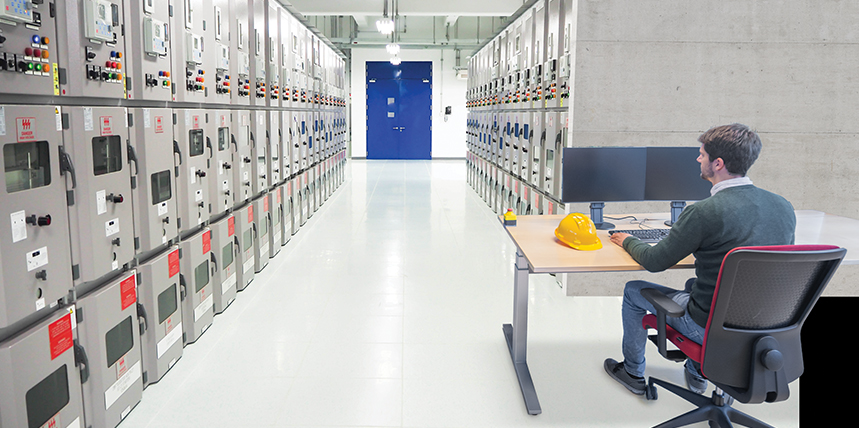
With the help of a CRP the operator has control over several functions in the substation through a single interface. Today’s CRPs come with:

  • SCADA integration
  • Remote operation
  • Advanced numerical relays
  • Real-time data logging

Such an arrangement is an efficient way for running the operations and a great decision-making tool.

3. Seamless Integration of Renewables

India is experiencing an exponential growth in solar and wind energy and that is why substations need to be able to manage variable power flows. Control Relay Panels facilitate a smooth connection to the grid and allow renewable energy sources to meet the grid’s requirements by:

  • Adjusting for variations
  • Reporting power quality
  • Enabling the automated switching and protection operations

4. Standardisation and Safety

High-voltage substations, especially 132 kV control relay panel and 220 kV control relay panel configurations, must comply with strict safety norms. CRPs ensure all operations follow the correct logic and lockout procedures.

What is more, this safety measures feature protects both the apparatus and the workers.

Modern Substations Use Different Control Relay Panels

1. Feeder Protection Panels

They are used for the feeder lines of transmission and distribution.

2. Transformer Protection Panels

They provide differential, overcurrent, and Buchholz protection.

3. Busbar Protection Panels

They stabilize the main power distribution system.

4. DG/Generator Relay Panels

They are the most common in industrial plants and captive power systems.

5. Numerical Relay Panels

They are armed with microprocessor-based protection relays for advanced accuracy and automation.

India’s Growing Demand for 132 kV and 220 kV Control Relay Panels

The transition of India to a more reliable and smarter power network raises the need for substations working at higher voltages. This, in turn, causes the demand for the following to increase:

1. 132 kV Control Relay Panel

It is the most common use in state transmission utilities and industrial substations. Perfect for:

  • Medium-scale transmission
  • Renewable grid integration
  • Industrial clusters and SEZs

2. 220 kV Control Relay Panel

The main requirement for the transmission corridors with high capacity. These panels provide:

  • Highly sensitive numerical relay protection
  • Quick clearing of faults
  • SCADA-enabled automation

The accuracy as well as the dependability of CRPs at these voltage levels are the main factors that determine grid stability and uptime.

HARTEK’s Specialization in Delivering Trustworthy Control Relay Panels

Hartek has made a name for itself as one of the most reliable Indian companies in the field of power infrastructure engineering. The company along with its EPC, substations up to 765 kV, and more than 10 GW of grid connectivity experience for decades has acquired a profound technical knowledge which it now brings to CRP manufacturing.

Hartek’s CRPs Are Distinguished By:

  • Most up-to-date numerical relays from the top global brands
  • Highly accurate wiring and quality control
  • Tailored designs according to substation needs
  • Good performance and a long operating duration
  • Excellent SCADA and communication integration
  • Following IEC and IS standards

Hartek’s CRPs are a safety, automation, and operational excellence upgrade that can be found in small distribution substations and large interstate transmission systems alike.

The Future: Digital and Intelligent CRPs

Digitalization is the future of substations, and so CRPs are changing accordingly as well.

The coming generation of control and relay panels will be equipped with:

  • Communication based on IEC 61850
  • IoT sensors working in real-time
  • Fully digital protection schemes
  • AI-supported fault analysis
  • Less wiring due to process bus technology

Such features will help substations to become more resilient, efficient, and self-correcting, which is in line with India’s move towards smart grids.
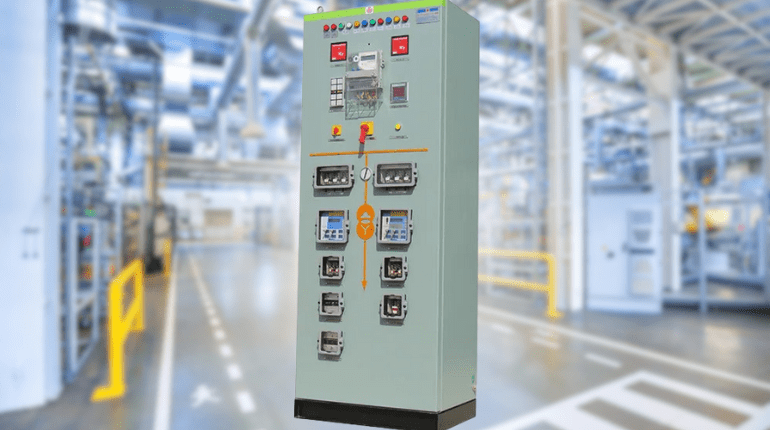
Conclusion: A Control Relay Panel with Reliable Operations Is a Must for Every Substation

The existence of a robust Control Relay Panel is what safety, stability, and operational reliability hinge on in every substation, be it a conventional one or a renewable one. The central intelligence that it is, a CRP stops faults from happening, helps in utilizing the resources more efficiently, and ensures that the flow of electricity goes smoothly without any interruptions.

With the country going through such an unprecedented scale of power infrastructure, the demand for reliable CRPs, whether 132 kV, 220 kV, or customized, will not be exhausted.

With the help of their strong engineering capabilities and profound domain expertise, companies like Hartek Group are the ones who play the pivotal role in equipping Indian substations with the most efficient control and protection systems, thus enabling uninterrupted power supply to the homes, industries, and the nation’s fast-developing economy.

Frequently Asked Questions (FAQ)

1. What does a Control Relay Panel do in a substation?

By detecting faults and isolating the faulty sections, a Control Relay Panel monitors, controls, and protects the electrical equipment.

2. What distinguishes a 132 kV Control Relay Panel from a 220 kV one?

132 kV CRP is the device that is used in the case of transmission substation of medium-voltage, whereas the function of 220 kV CRP is to work with high-capacity transmission lines and also demands more advanced protection schemes.

3. For a renewable energy substation, why is a CRP necessary?

Since renewable energy sources produce power that fluctuates, CRPs are instrumental in grid stability by controlling the variations, protecting the equipment, and ensuring grid code compliance.

4. In what ways does a numerical relay make a CRP more efficient?

A numerical relay can provide protection faster and with more accuracy, give detailed fault analysis, reduce the wiring needed, and allow for digital communication with SCADA systems.

5. What are the reasons for choosing Hartek for Control Relay Panels?

Hartek offers CRPs that are of high quality, customized and compliant with the standards. They are constructed with cutting-edge relays, dependable design, and robust integration capabilities for all voltage ​‍​‌‍​‍‌levels.

Renewable Energy in India Takes Center Stage at REI 2025

The renewable energy sector in India has been making significant strides over the past few years, and the excitement is set to reach its peak at the Renewable Energy India (REI) event.

Hartek, a leading renewable energy company in India, continues to contribute to the growth of renewable energy in India through its focus on clean energy solutions and its efforts to support the nation’s sustainable development goals.

India’s Renewable Energy Revolution: HARTEK Leading the Way

The transformation of India from a power-deficit country to a global leader in renewable energy, with a total non-fossil fuel capacity now exceeding 250 GW and total renewable capacity reaching 247.3 GW (as of late 2025), has been remarkable. The country has set a goal to have 500 GW of electricity capacity from clean sources by 2030.

The impressive progress made by India as a result of the government’s bold initiatives, private sector participation, and technological innovation in renewable energy sources such as solar, wind, hydropower, and biomass has positioned the country as a frontrunner in the global clean energy transition.

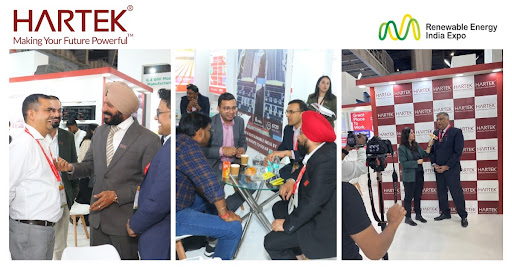
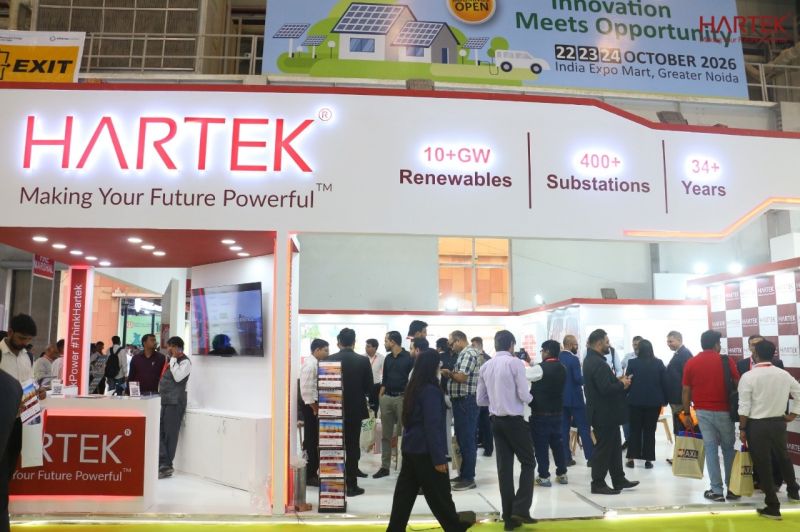
India’s next phase of clean-energy growth will be mapped at the Renewable Energy India (REI) Expo 2025 which is going to be a celebration of these milestones.

Hartek, one of the leading EPCs in the renewable energy sector in India, is driving this shift through transformative renewable energy projects across the country. By participating in REI 2025, the company demonstrates its dedication to sustainability, decarbonisation, and nation-building. It continues to promote the use of clean energy and contributes significantly to India’s goal of achieving carbon neutrality by 2070.

The Significance of REI 2025

REI Expo is more than just an exhibition; it is a comprehensive global platform that drives collaboration, innovation, and investment across the renewable energy ecosystem. Serving as a hub for knowledge exchange and business opportunities, the event provides a unique space for stakeholders to explore emerging technologies, sustainable solutions, and strategic partnerships. REI 2025, scheduled to be held at the India Expo Centre in Greater Noida, will bring together policymakers, business leaders, investors, and technology innovators from around the world to share insights, showcase advancements, and collectively accelerate the transition toward a cleaner, greener, and more sustainable energy future.

The theme of the current edition will be on fast developing technologies, refurbishing policies and establishing new forms of business that would accelerate the adoption of renewable energy within the nation. They will be discussing grid integration, energy storage, and green hydrogen, among other topics, which are crucial for India’s future sustainability.

For leading renewable energy companies like Hartek Group, REI 2025 is not only a platform to learn but also an opportunity to showcase cutting-edge engineering and intelligent grid solutions that power solar, wind, and hybrid projects.

Renewable Energy Sources Driving the Change

The expansion of India’s energy that is clean comes from a diverse mix of sources all of which are renewable but each playing a different role in reducing carbon emissions and enhancing energy accessibility.

renewable energy sources

1. Solar Power: The Rising Star

India has become one of the largest solar energy markets in the world, with installed capacity reaching approximately 130 GW by October 2025. The government’s promotion of rooftop solar, solar parks, and floating solar projects has brought solar power within the reach of not only urban but also rural consumers.

The innovations like bifacial panels, AI-based monitoring, and advanced inverters are coming up with efficient and more affordable solar energy, thereby putting India nearer to the goal of 280 GW of solar capacity by 2030.

2. Wind Energy: Harnessing Natural Strength

Wind energy is still very essential in India’s renewable plan with an approximate capacity of 50 GW as of 2025. Gujarat, Tamil Nadu, and Maharashtra are still going strong and leading the wind installation initiatives, however, the latest technologies for turbines and the repowering of the old sites are helping in more power generation and cost reduction.

3. Hydropower and Biomass: The Balancing Forces

Hydropower and biomass have been helping India’s power grid to be stable as they are reliable energy sources that complement intermittent renewables like solar and wind. Moreover, the small hydro and biomass gasification projects are not only solving power problems but also creating employment in rural areas and encouraging decentralised energy access throughout the country.

HARTEK’s Role in Powering India’s Renewable Future

HARTEK Group, one of India’s top three engineering, procurement, and construction (EPC) companies in the solar sector, has been playing a pivotal role in integrating renewable energy into the national grid. With over 10 GW of solar grid connectivity and expertise in developing substations of up to 765 kV, HARTEK continues to drive large-scale clean energy transformation. The company recently commissioned a 300 MW solar project, reaffirming its position as a leader in sustainable infrastructure. Leveraging its deep expertise in power systems, smart grids, and distributed energy, HARTEK ensures that renewable energy remains reliable, scalable, and economically viable. Its participation in REI 2025 will showcase innovative solutions aligned with India’s Net Zero goals and the government’s National Green Hydrogen Mission.

India’s Policy Push for Renewable Energy

The public-sector programs are what act as the spine of India’s turnaround of renewables. Essential programs are:

  • Production Linked Incentive (PLI) Scheme – Aimed at supporting the domestic manufacturing of high-efficiency solar PV modules and decreasing the country’s dependency on imports.
  • National Green Hydrogen Mission (2023) – The mission aims to position India as the world’s hub for green hydrogen production, with a target of achieving 5 million tonnes per year by 2030, though this goal may extend to FY2032 due to evolving global market conditions.
  • PM-KUSUM Scheme – Helps solar power which is decentralized and at the same time gives farmers a source of stable income.
  • Solar Park and Ultra Mega Solar Power Projects – Facilitate solar-powered utility developments across the nation.

With these initiatives, a robust policy and financial foundation has been established for the sector, bolstered by a record FDI inflow of $3.4 billion in the first three quarters of FY 2024–25, contributing to a cumulative total of $12.67 billion since April 2020.

At REI 2025, it will be the time and place for such people to discuss the best ways to implement their plans quickly and get the private-sector involved more.

The Road Ahead: Innovation and Collaboration

The future of renewable energy in India is hinged on the progressive ideas, partnership, and wise investment. The major issues that will set the stage for next phase are:

  • Hybrid Renewable Projects: By coupling solar and wind one can have the most beneficial use of land and grid.
  • Energy Storage Solutions: By 24/7 clean power can be done if they use advanced battery and pumped-storage systems.
  • Green Hydrogen: Soon will be the clean fuel for heavy industries and transport that came from renewable sources.
  • Smart Grids & Digitalisation: By using IoT, AI, and analytics the grid becomes more efficient and reliable.

REI 2025 will be the perfect place to meet, talk about, and sign deals for these technologies, which will lead India to a sustainable and self-reliant energy future.

renewable energy companies

Conclusion: A Brighter, Cleaner Future for India

The term renewables was at one time just a buzzword until it became a nationwide mission in India. Such events like REI 2025, apart from marking India’s achievements, also bring forward the new wave of innovation and of investment.

As renewable energy companies such as HARTEK Group continue to lead by example, India’s clean-energy journey will stand as a model for the world.

India’s commitment is clear, to power its future responsibly, efficiently, and inclusively. The stage is set, and the world is watching: Renewable Energy in India is truly taking centre stage at REI 2025.

Frequently Asked Questions (FAQ)

1. What is REI 2025? 

REI 2025 means the Renewable Energy India Expo 2025, which is one of the largest renewable energy expos in Asia, and it facilitates interaction between global stakeholders in order to promote clean energy technologies and collaborations.

2. Why is renewable energy important for India? 

The use of renewable resources allows India to lessen the need for fossil fuels, mitigate carbon emissions, assure energy security, and propel economic growth and rural development.

3. What are the most popular renewable energy sources in India? 

The primary sources of renewable energy are solar, wind, hydropower, and biomass. Out of these two, solar and wind are the quickest to grow.

4. What steps is the Indian government taking to support renewable energy growth?

They do it by implementing various schemes like PLI for solar manufacturing, the National Green Hydrogen Mission, and PM-KUSUM along with providing fiscal incentives and imposing renewable purchase obligations.

5. What role does HARTEK Group play in India’s renewable energy ecosystem? 

The company provides EPC, grid connectivity, and smart infrastructure solutions to support solar and other renewable energy projects across India. Through these efforts, it plays a key role in enabling the nation’s clean energy transition.

To learn more about the event and its highlights, we invite you to check out the video below.